

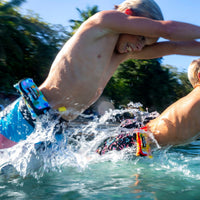

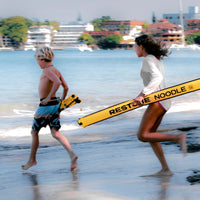
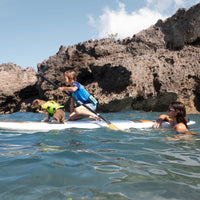
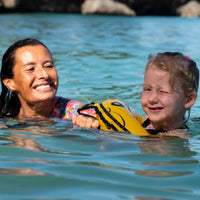

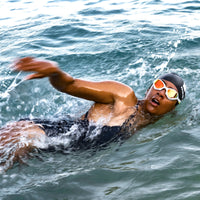


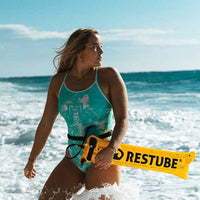
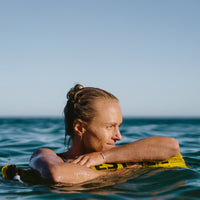
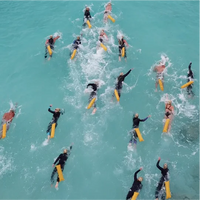
Woman and Man share a SUP, he swears the SUP, she splashes water on him
Stand Up Paddle
FREE PDF Download available

Water Safety Guide for Stand-Up Paddling

River, lake, or sea – standing on your board puts you right in the middle of nature, close to the water, close to freedom. But out on the water, you're on your own: wind, current, and your own strength determine how safe your trip turns out to be. This guide explains what hazards can arise while stand up paddling and how to equip and protect yourself, others, and your fun on the water.
Kimo Kersting RESTUBE
Experts · Stand Up Paddle
Kimo Kersting · Pagayeur professionnel de stand up paddle & RESTUBE · Entreprise spécialisée dans la sécurité aquatique

~ 500

SUP accidents per year in Switzerland

Suva

+164%

increase in SUP fatalities in the US – from 11 to 29 deaths between 2023 and 2024

US Coast Guard, Recreational Boating Statistics 2024

413

paddleboarding incidents handled by RNLI lifeguards on beaches across the UK and Channel Islands in 2024

RNLI

87%

of drowning victims in US recreational boating accidents – including SUP, kayak and canoe – were not wearing a life jacket (2024)

US Coast Guard, Recreational Boating Statistics 2024

Hazards in Detail

What Can Happen on Your Board

On a SUP, wind, current, and balance all come into play at once. That's what makes it unpredictable. The better you know the hazards, the calmer you'll stay when it counts.

  • Courant inattendu ?

    Courant inattendu ?

    On coastlines, rivers or in tidal areas, currents can shift faster than you can react – and unexpectedly sweep you along. Fighting straight against it just wastes your energy and exhausts you fast. Stay calm, move diagonally out of the current, lean on your buoy for support if you need to, and make yourself visible with it if you need help.

  • Loin du rivage?

    Loin du rivage?

    On the water, distances are deceptively short. Wind, current, or your own enthusiasm can carry you further from shore than you realize. If the way back is suddenly too far, every minute costs you more energy. Make yourself visible with a bright-colored buoy, and use it to swim back to shore while saving your strength.

  • Conditions difficiles dans l'eau ?

    Conditions difficiles dans l'eau ?

    Chop, gusts or swell can quickly turn a relaxed time on the water into a real test of strength. Control and balance get harder, and mishaps pile up. In these conditions, pushing on often isn't safe anymore. Make yourself visible with your buoy and get off the water as soon as you can.

  • Une baisse d'énergie ?

    Une baisse d'énergie ?

    Whether you're swimming, paddling, or riding the wind at your back: out on the water, your strength can fade faster than you'd expect – current, distance, or cold all drain your reserves even more. With RESTUBE, instant buoyancy is always within reach – to catch your breath, or to keep you afloat when it really matters.

  • Paniqué-e-s ?

    Paniqué-e-s ?

    Falling into cold water, an unexpected wave or losing your bearings can send even experienced water sports enthusiasts into a brief moment of panic. Panic makes you react in a rushed, energy-draining way – the opposite of what you need. Breathe deliberately, lean on your buoy, and wait for your pulse to settle before you act.

  • Problèmes circulatoires ?

    Problèmes circulatoires ?

    Exertion, heat or cold water take a bigger toll on your circulation than you'd think – out on the water, you often notice it later than you should. Dizziness or nausea is a clear signal to slow down or take a break immediately. Stay hydrated, rest when you need to, and pull your RESTUBE safety buoy for instant buoyancy if things get serious.

  • Équipement cassé ou perdu?

    Équipement cassé ou perdu?

    A broken paddle, a snapped line or lost gear suddenly leaves you without propulsion or a connection to your equipment – an uncomfortable spot out on the water. Without your gear, even the short way back gets exhausting. Your RESTUBE safety buoy keeps you afloat and visible while you make your way back.

  • Fall into the water?

    An unplanned fall into the water can happen anywhere – off a board, out of a boat, or during a maneuver. Usually harmless, but in wind, waves or cold water, suddenly being separated from your gear can turn serious. Stay calm, let your RESTUBE buoy give you instant buoyancy, and get your bearings until you're back aboard or ashore.

  • Changements soudains de météo ?

    Changements soudains de météo ?

    Weather on the water can change within minutes: dark clouds, rising wind or a storm often give little warning. Out on the water, you feel the effects especially fast. Watch the sky, head in early, and make yourself visible with your buoy if you need help quickly.

  • Un chien qui apprend à nager ?

    Un chien qui apprend à nager ?

    On first contact with water, your dog can quickly feel overwhelmed – they panic, swallow water, or swim too far out without properly judging their own strength. The high buoyancy of the RESTUBE Dog Life Jacket gives them stability and confidence, so they swim more relaxed and tire less quickly. Bright colors and reflective details also keep them clearly visible in waves or at dusk, and the built-in carry handle lets you get them out of the water quickly and safely in an emergency.

  • Un chien plus vieux ou malade ?

    Un chien plus vieux ou malade ?

    Older or sick dogs tire faster in the water and often have less strength left in their legs and joints. The RESTUBE Dog Life Jacket relieves the strain with high buoyancy and an optimal swimming position, while the soft padding and side-adjustable fit sit comfortably even on sensitive skin. The built-in carry handle lets you bring your dog back on board or to shore quickly and without stress in an emergency.

  • Alcool ou excès de confiance ?

    Never drink alcohol if you plan to be on the water afterward. It slows your reactions, which can be very dangerous in a real emergency.

Safety Tips for SUP

Before You Step on Your Board

Safety Tips for SUP

These eight tips prepare you for any SUP session – from a calm lake to choppy waves. Knowing and following them significantly lowers your risk of ending up in a critical situation.

  1. Assess your own skills realistically & train your technique

    Be honest about what you can handle, and practice safe turning as well as staying calm in stressful situations – like when a boat is heading your way. For beginners, SUP national team athlete Kimo Kersting recommends taking a beginner's course.

    Savoir nager & compétence aquatique : pourquoi la technique seule ne protège pas
  2. Paddle AGAINST wind and current first

    Especially as a beginner, start out paddling against the wind and current, even if it feels more strenuous. That way, you won't run out of energy on the way back.

    Connaître ses limites : gestion de l'effort et signaux d'alerte physiques dans les sports nautiques
  3. Check conditions and area before you go in

    Before you start, get an overview of wind strength, current, and weather developments in your area. These external factors are exactly what's often underestimated in SUP – yet they're crucial, precisely because you're out in the middle of nature.

    Eau froide, orages et visibilité : ce que tout amateur de sports nautiques doit savoir
  4. Share your route – never paddle unnoticed

    Tell someone on land where you're paddling and when you plan to be back. That way, if something goes wrong, someone knows where to start looking.

  5. Choose the right leash for the type of water

    On flat water and in waves, an ankle leash works well; on rivers or whitewater, use a quick-release waist leash instead. That way, your board won't drift away, and the leash won't get caught on obstacles underwater.

  6. Wear an additional buoyancy aid

    An additional buoyancy aid like the RESTUBE PFD gives you extra safety – for SUP, a CE-certified buoyancy aid is even legally required beyond 300m from shore in some places, such as Lake Constance or Switzerland.

    Assurer la Flottaison : Pourquoi la Flottabilité Sauve des Vies en Cas de Noyade
  7. Protect yourself from cold and sun

    Sunscreen and UV-protective clothing are essential on a SUP, since water reflects up to 30% of UV radiation. In cold water, a wetsuit slows heat loss and helps protect you from hypothermia.

    Protection solaire pour les sports nautiques : rayonnement UV, crème solaire & vêtements UV
  8. Eat and drink enough for longer tours

    Before longer tours, eat a light, easily digestible meal and pack a snack to take with you – drink regularly in small sips while paddling, too. Paddling hungry or dehydrated makes you tire faster and slows your reactions in critical situations.

    Boire, Manger, Nager, Recommencer : Le guide complet nutrition et hydratation pour les nageurs

In An Emergency

The Chain of Survival: What To Do In An Emergency

Drowning happens in stages, not all at once – and at every stage, there's still a way to stop it. These are the five links of the Chain of Survival, condensed for this activity.

The Chain of Survival: What To Do In An Emergency
  1. 1. Prevent Drowning 1
    1. Prevent Drowning

    Be safe in, on and around water. The most effective link in the chain is the one that stops an emergency from happening in the first place: know the conditions, know your limits, never go in alone.

    Step 1: Prévention de la Noyade : le premier maillon de la Chaîne de Survie
  2. 2. Recognize Distress 2
    2. Recognize Distress

    A person in trouble rarely looks like it does in films: little shouting, little waving, often just a quiet struggle at the surface. Knowing the signs means reacting sooner and asking someone to call for help.

    Step 2: Noyade Silencieuse : Reconnaître la Détresse et Alerter les Secours
  3. 3. Provide Flotation 3
    3. Provide Flotation

    Before anything else, the person needs flotation, their own or from outside, to prevent submersion. Flotation costs no strength and buys time.

    Step 3: Assurer la Flottaison : Pourquoi la Flottabilité Sauve des Vies en Cas de Noyade
  4. 4. Remove From Water 4
    4. Remove From Water

    Only if it's safe to do so. Getting the person out of the water matters, but not at the cost of a second person in danger.

    Step 4: Aide Extérieure : Comment Aider en Sécurité Sans Te Mettre en Danger
  5. 5. Provide Care 5
    5. Provide Care

    As needed: call emergency services, check breathing, start CPR if necessary and don't stop until help arrives. What happens on land in the first minutes often decides the outcome.

    Step 5: Premiers Secours en Cas de Noyade : Méthode ABCDE, Bouche-à-Bouche et RCP Bien Menée
Safety Equipment for Stand-Up Paddling

What You Need on the Water

Safety Equipment for Stand-Up Paddling

Good gear won't replace experience or common sense, but it can give you the crucial seconds to react in an emergency.

  • Inflatable Safety Buoy
    Inflatable Safety Buoy

    Inflatable Safety Buoy

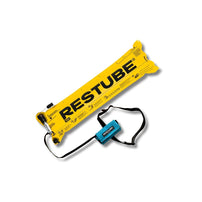
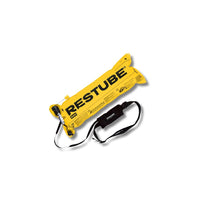
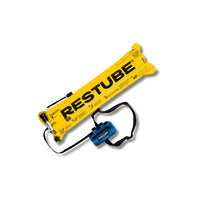
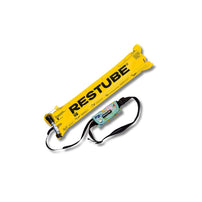
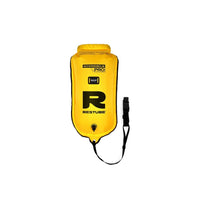
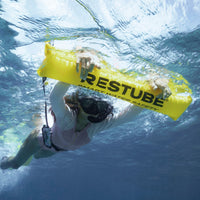
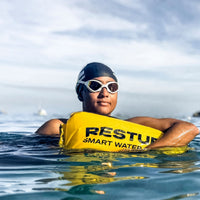
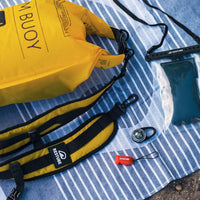
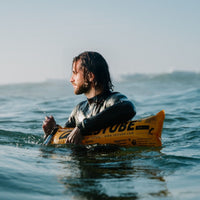
    The Safety Buoy is stored compactly in a belt pouch, so you don't even notice it while paddling. In an emergency, simply pull the trigger and the buoy fills with CO₂ in seconds, giving you instant buoyancy if you fall into the water or need a break. The built-in signal whistle also helps you get noticed if you need help.

    Our Recommendation Inflatable Safety Buoy
  • Personal Flotation Device (PFD)
    Personal Flotation Device (PFD)

    Personal Flotation Device (PFD)

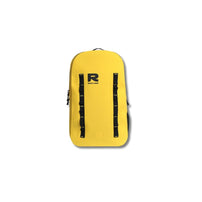
    This PFD is a particularly light and compact buoyancy aid that won't hold you back while you're active on the water. It's CE-certified with 50 N of buoyancy per DIN EN ISO 12402-5 / DIN EN ISO 12402-6 and is especially suited for places where a certified buoyancy aid is legally required for SUP, such as Lake Constance or across Switzerland. Thanks to the SUP Safety Leash Connector, it can be connected directly to your leash.

  • Wetsuit

    A wetsuit, e.g. from Synergy are recommended for water temperatures below 18°C (64°F): it slows down heat loss in the water and, thanks to its closed-cell neoprene structure, also improves your natural buoyancy. The right thickness depends on the water temperature: 2–3 mm up to about 18°C, 4/3 mm between 10 and 18°C, and 5/4 mm or more below 10°C.

  • Safety Leash

    Safety Leash

    The safety leash connects you to your board so you don't get separated in an emergency. On calm water like lakes or near-shore sea, a classic ankle or calf leash like the °hf Connect SUP Board LEASH is enough. On rivers, in tidal waters, or in strong currents, switch to a quick-release waist system instead. That's exactly what the °hf Synergy SUP BELT with emergency-release system is built for. Its RESTUBE READY interface also lets you attach a safety buoy – for extra buoyancy in an emergency.

    Our Recommendation Safety Leash
  • Dog Life Jacket

    Dog Life Jacket

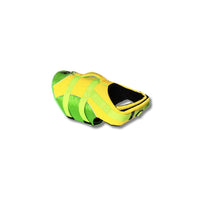
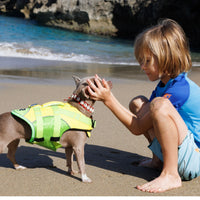
    This Dog Life Jacket for your four-legged friend provides support thanks to high buoyancy and a stable swimming position during any shared water activity – whether swimming, SUP, or a boat trip. Bright colors, reflective details, and a loop for an optional LED light keep them clearly visible in waves or at dusk. The ergonomic carry handle lets you act quickly and safely when boarding a boat, at the dock, or in an emergency.

    Our Recommendation Dog Life Jacket
Go or No-Go

Self-Check

Go or No-Go

Check yourself, check the water, then decide if you can paddle.

Suitable for

  • Beginners on calm, wind-free water with brief instruction
  • Experienced paddlers, even in moderate wind, waves or light current – in currents, use a quick-release waist leash instead of a standard ankle leash (entanglement risk!)
  • Fitness and endurance athletes looking for a full-body workout
  • Children from about age 6, once they can swim confidently, wearing their own certified flotation aid, staying close to shore and supervised
  • Older adults without pre-existing conditions, accompanied, on calm water
  • Dogs used to water, wearing their own life vest, supervised

 Better not, if

  • Strong wind – especially offshore – or a storm warning is in effect
  • Strong currents, flooding or whitewater occur without sufficient experience or the right leash
  • Thunderstorms or a sudden change in weather are forecast
  • You can't swim or feel unsafe in water – without an additional flotation aid
  • Alcohol or medication that impairs reaction time has been consumed
  • Known heart or circulatory conditions are present without medical clearance
  • Water quality is unknown, questionable, or officially restricted
  • Water temperature is below 18°C (64°F) and no suitable wetsuit is worn (below 10°C/50°F: at least 5/4mm)

Expert Voice

What Our Ambassadors Say

Kimo Kersting

Kimo Kersting

Pagayeur professionnel de stand up paddle

Beaucoup de gens ne pensent qu'à la pagaie elle-même. Mais que se passe-t-il si je tombe à l'eau, que ma planche dérive, ou que je n'arrive pas à remonter dessus seul ? En tant que moniteur de stand up paddle dans une école de surf, j'ai régulièrement été témoin de situations comme celle-ci. C'est pourquoi il est important d'évaluer ses propres capacités de façon réaliste – c'est le seul facteur que tu peux vraiment contrôler.

Read the full article from Kimo Kersting

FAQ: Stand-Up Paddling

Still have questions about stand-up paddling? Here you'll find answers on safety, gear, and the most common uncertainties around SUP.

Water Safety Guide

More articles about Stand Up Paddle

  • Courants d'aspiration en rivière: pourquoi les barrages et écluses sont si dangereux
    BASES & DANGERS

    Courants d'aspiration en rivière: pourquoi les barrages et écluses sont si dangereux

    Tandis que des phénomènes spectaculaires comme les grands rouleaux hydrauliques ou les rapides attirent souvent l'attention, le danger le plus fréquent et le plus réaliste dans de nombreuses rivières d'Europe centrale se trouve aux ouvrages fixes tels que les écluses, les barrages et les déversoirs. C'est là que se forment des tourbillons et des courants d'aspiration verticaux, rendant ces endroits particulièrement trompeurs pour les nageurs et les amateurs de sports nautiques - difficiles à repérer et souvent limités à des zones très restreintes.

    2 min

    426

    Read Article →
  • Comprendre l'hydrodynamique : courants, vagues et mouvements de l'eau
    BASES & DANGERS

    Comprendre l'hydrodynamique : courants, vagues et mouvements de l'eau

    L'eau n'est jamais passive - elle porte, pousse et tire. Sous chaque surface calme, des forces invisibles sont constamment à l'œuvre, façonnant les courants, le ressac et les mouvements de l'eau d'une manière que la plupart des gens ne remarquent jamais. Comprendre comment l'eau se déplace, pourquoi certains endroits sont bien plus dangereux qu'ils n'y paraissent, et comment les reconnaître et y réagir peut faire toute la différence au moment où cela compte le plus.

    4 min

    198

    Read Article →
  • Courants fluviaux: reconnaître les tourbillons, barrages et pièges cachés
    BASES & DANGERS

    Courants fluviaux: reconnaître les tourbillons, barrages et pièges cachés

    En Allemagne, 153 personnes se sont noyées dans des rivières et des ruisseaux en 2025 (statistiques de noyade de la DLRG) - faisant des eaux courantes l'environnement le plus meurtrier pour les noyades. Les courants dans les rivières sont rarement uniformes. En particulier dans les zones où la structure naturelle ou artificielle de la rivière change, des schémas de courant complexes et souvent chaotiques se développent. Cela inclut les méandres, les piliers de ponts, les barrages, les écluses et d'autres structures. C'est précisément à ces endroits que se concentrent de nombreux accidents, car les forces qui y agissent sont difficiles à détecter et exceptionnellement puissantes.

    2 min

    154

    Read Article →