Why Prevention Is More Effective Than Any Rescue Measure

As the first link in the Drowning Chain of Survival, prevention is also one of the most powerful. From a scientific standpoint, no other measure has a comparable impact on reducing drowning incidents. While medical and rescue interventions only come into play once an emergency has already begun, prevention acts before that point: its goal is to stop the drowning process from ever starting. The WHO, the International Life Saving Federation (ILSF), and the European Resuscitation Council (ERC) therefore all agree that prevention is the single most effective measure for reducing drowning deaths worldwide.
Who Is Most Affected by Drowning?
According to the WHO Global Status Report on Drowning Prevention, drowning is one of the most common causes of accidental death worldwide. Those most affected are children under five, adolescents, and people who are regularly on or near the water for work or leisure. More than 90% of all drowning deaths occur in low- and middle-income countries - mostly due to a lack of swimming education, inadequate safety infrastructure, insufficient supervision of children, and limited access to professional water rescue services.
In industrialized nations, the risk profile looks different. Here, fatal accidents happen mainly during leisure activities such as swimming, stand-up paddling, sailing, kayaking or fishing. Alcohol, overconfidence, a lack of weather awareness, and misjudging currents and waves all play a major role. Many people rate their own safety as higher than the actual risks justify.
The Risk Perception Gap: When Overconfidence Becomes Dangerous
Safety research calls this gap between perceived and actual risk the "risk perception gap" - one of the biggest challenges for prevention work.
Why Being Able to Swim Doesn't Protect You From Drowning: Water Competence vs. Swimming Ability
For a long time, swimming ability was considered the key safety factor. Scientific findings show otherwise: staying safe in the water takes more than swimming technique. Modern drowning prevention has therefore moved beyond simply avoiding accidents and focuses on water competence instead. Water competence combines motor, cognitive, and behavioral skills - from controlled floating and safe submersion to recognizing currents and changing weather, to respecting personal limits and safety rules.

This also explains why many drowning victims were actually able to swim. Doing laps in a pool, however, says very little about how safe someone really is in open water. There, currents, wind, waves, cold water, exhaustion, and stress all act at once - even single factors can significantly weaken performance, and several together increase the risk exponentially. The WHO puts it clearly: being able to swim isn't enough - only water competence truly protects against drowning. Learn more about the difference between swimming ability and water competence here.
Cold Water Shock - The Underestimated Danger in Cold Water
Another key part of prevention concerns the physiological effects of cold water. Many fatal accidents don't happen because of poor swimming ability, but because of the body's immediate physical reaction to sudden immersion in cold water. Water temperatures below about 15°C (59°F) can already trigger cold shock response: a reflexive response of the autonomic nervous system that sets in within seconds of contact with cold water. Typical signs include uncontrolled gasping, hyperventilation, a sudden spike in heart rate and blood pressure, and a significantly reduced ability to consciously control breathing.

The involuntary breathing reflex directly underwater is especially dangerous: if the head goes under at that exact moment, the first reflexive gasp alone can pull large amounts of water into the lungs. At the same time, hyperventilation makes controlled swimming or self-rescue attempts much harder. Studies show that a large share of fatal cold-water accidents happen within the first few minutes of water contact - caused by this immediate stress response, not by later hypothermia. That's why prevention programs recommend: after an unexpected fall into water, consciously control your breathing first and avoid frantic movements before starting to swim actively.
Why We Misjudge Risk in the Water
Alongside physiology, human decision-making also plays a major role. Two cognitive biases shape behavior in the water in particular:
-
Optimism bias - the belief that accidents only happen to other people.
-
Overconfidence effect - where people systematically overestimate their own abilities.
Both lead people to ignore warnings, underestimate weather conditions, or push past their personal limits. Anyone who considers themselves a strong swimmer is also more likely to skip safety equipment. This is especially true for competent occasional water sports enthusiasts, who systematically underestimate the risks of currents, exhaustion, and physical strain. Find out more in the RESTUBE Water Safety Study 2026.
Prevention work therefore has to do more than just share information - it has to actively influence safety-related decisions. Modern safety communication increasingly relies on behavioral science approaches from human factors research and risk psychology.
Children in the Water - Why Constant Supervision Is Essential
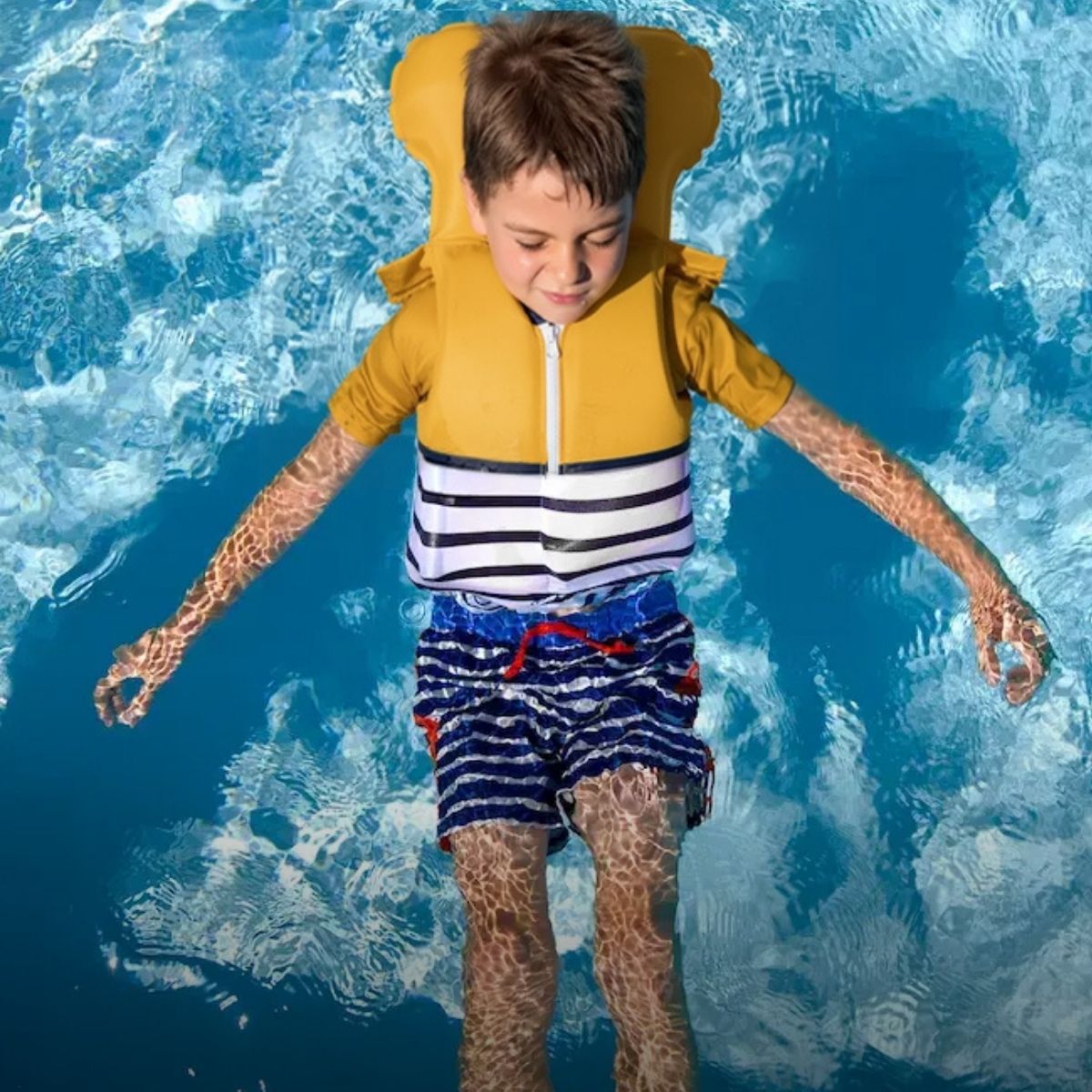
Another key focus of prevention: constant supervision of at-risk groups, especially young children. International studies show that just a few unsupervised seconds near water can be enough for a fatal accident - because of their body proportions, children can lose their balance even in very shallow water. The WHO therefore recommends uninterrupted, active supervision by a responsible adult. Cameras or warning signs are no substitute for this. Physical barriers such as pool fencing, on the other hand, are among the most effective single measures against child drowning. Learn more about early water safety here.

The Swiss Cheese Model: Prevention as a System
Prevention doesn't stop at individual behavior. Modern safety concepts never look at people in isolation, but in interaction with their environment, equipment, and organization. According to James Reason's Swiss Cheese Model, accidents almost never result from a single mistake - usually, several weaknesses line up at the same time. Applied to water sports: a fatal accident often only happens through the interplay of several factors, such as missed weather checks, no flotation device, insufficient water competence, going out alone, and delayed alerting of help. Prevention therefore aims to build up as many of these protective barriers as possible in advance - to prevent the gaps from ever lining up by chance.

Conclusion: Prevention Works Twice Over
Prevention has a double function within the Drowning Chain of Survival:
- It prevents a drowning process from starting in the first place.
- It improves the starting conditions for every following link in the rescue chain - people with strong water competence recognize danger earlier, react better to the unexpected, use protective equipment more consistently, and get help faster.
That's why prevention stands at the very start of the chain: it lays the foundation for every measure that follows, and is considered in international literature to be the most effective and cost-efficient strategy against drowning worldwide.
Want to learn more about prevention? Browse through Chapter 2 of our Safety Guide.


















 Swimming
 Surfing
 Kitesurfing
 Stand Up Paddling
 Windsurfing
 Casual beach days
 On board
 Snorkeling
 Rowing
 Canoeing & Kayaking
 Fishing
 Professional Rescue
 Stream/Creek
 River
River
 Canal
Canal
 Sea
Sea
 Swimming Pool
 Lake
Lake
 Pond
Pond


