When Should I Enter the Water?
"Most dangers in the water are visible - but only to those who know what to look for. Safety does not begin in the water. It begins the moment you decide to enter it." ~ Christopher Fuhrhop, Founder RESTUBE
Most critical situations in the water do not begin in the water itself - they begin before, in the moment you decide to enter. Anyone who wants to stay safe in the water must therefore learn to read dangers correctly before getting in. Professional users such as rescue teams and experienced water sports enthusiasts do not rely on intuition alone, but on a clear logic of observation: they analyse the environment, interpret the signs, and only then make a conscious decision.
Studies show that we systematically underestimate environmental factors such as currents, weather, and temperature - while simultaneously overestimating our own capabilities. What makes this particularly treacherous: when no visible danger is present, we unconsciously switch off our awareness of risk. Rip currents and cold shock give no visual warning. Water is also never static. What seems safe when you enter can change within minutes. Those who learn to systematically read the environment before getting in avoid most risks before they even arise.

Getting an Overall Picture: What Does the Surface Tell You?
The first step is to get an overall impression. Before you even approach the water, observe how the surface behaves.
- Does the water look calm and even, or restless and chaotic?
- Are there clear wave patterns, or are the waves breaking irregularly?
- Are other people in the water, and if so, where exactly?
A calm impression can be deceptive. Dangerous currents are often not immediately visible. They do not announce themselves through spectacular movement - they act steadily and beneath the surface.
Reading Water Movement: What Do Waves and Currents Reveal?
Waves, currents, and surface structures give decisive clues about what is happening beneath the surface. Along coastlines, you may notice that waves do not break evenly everywhere. Areas where fewer waves are breaking, or where the water appears smoother, can indicate rip currents - currents that funnel water back out to sea in concentrated corridors.
Drifting objects such as foam, seaweed, or small particles are also valuable indicators. If they are visibly moving in a particular direction, or drifting sideways along the coast, this points to currents that will act on your body too.
Wind: The Underestimated Factor
Wind is a decisive factor that is frequently underestimated. Its effect is not always immediately visible, but it is constant. Direction plays a central role. Wind blowing from land out to sea can cause you to drift away from shore without noticing. At the same time, wind changes the water surface, influences waves, and amplifies existing currents.
The situation becomes particularly critical when wind conditions change while you are in the water. A calm day can turn quickly when gusts increase or the direction shifts.
Recognising Weather Changes Early
Building clouds, falling temperatures, or increasing wind are clear signs that the system is changing. In the water, this always means an increase in physical strain. The more dynamic the environment becomes, the less control you have.
Those who notice these changes before entering the water can avoid many risks.
Invisible Dangers: Temperature and the Thermocline
Beyond the visible factors, there are also invisible dangers. Water temperature is a key one. In lakes especially, a significantly colder layer of water can lie just beneath a warm surface. This so-called "thermocline" is not visible, but when you dive or move into deeper areas it can cause a sudden cold stimulus. The body often reacts involuntarily - with a breathing response or a loss of muscle control.
Being aware of this possibility allows you to adjust your behaviour accordingly and avoid being caught off guard.
The Environment as a Source of Information
Along coastlines, sandbars, channels, or uneven wave heights can indicate complex current systems. In rivers, obstacles such as rocks, bridges, or weirs accelerate, redirect, or churn the water. Lakes often appear harmless, yet suddenly dropping depths or darker patches of water can point to cold, deeper zones.
Every change in the environment means a change in the forces acting in the water.
The Behaviour of Other People
One of the most valuable but often overlooked indicators is the behaviour of other people. If people are visibly drifting, struggling against a current, or staying conspicuously close to certain areas, this can be a sign of existing hazards. The presence of lifeguards or warning signs should also be taken seriously.
Other people often reflect what you yourself have not yet noticed.
Before You Enter: The Three Decisive Questions
In the end, it always comes down to a conscious decision. Before you enter the water, ask yourself three questions:
- How do I get back?
- What do I do if I become exhausted?
- Where can I get help?
If these questions cannot be clearly answered, the risk is high - regardless of how calm the situation appears at first.
Safety in the water does not begin with moving through the water. It begins with the ability to read the environment correctly.

Swimming Safety Rules: Knowledge That Saves Lives - But Only When Applied
Swimming safety rules represent a simplified form of complex safety-relevant principles. Their function is to translate scientifically grounded knowledge into easy-to-understand guidelines for action.
From a scientific perspective, swimming rules reduce your risk before it arises. They address in particular:
- the avoidance of high-risk situations (e.g. swimming in unfamiliar currents)
- the minimisation of physiological strain (e.g. cooling down before entering the water)
- the improvement of responsiveness in an emergency (e.g. never swimming alone)
A well-established example of such behaviour-based safety strategies are the swimming rules of the DLRG (German Life Saving Association), based on decades of experience in water rescue services and addressing the most common causes of accidents in the water.
The most important rules:

You can find more swimming safety tips here.
The problem is not knowledge, it is application. Under fatigue, social pressure, or misjudgement, these rules are broken most often. Precisely when they matter most.
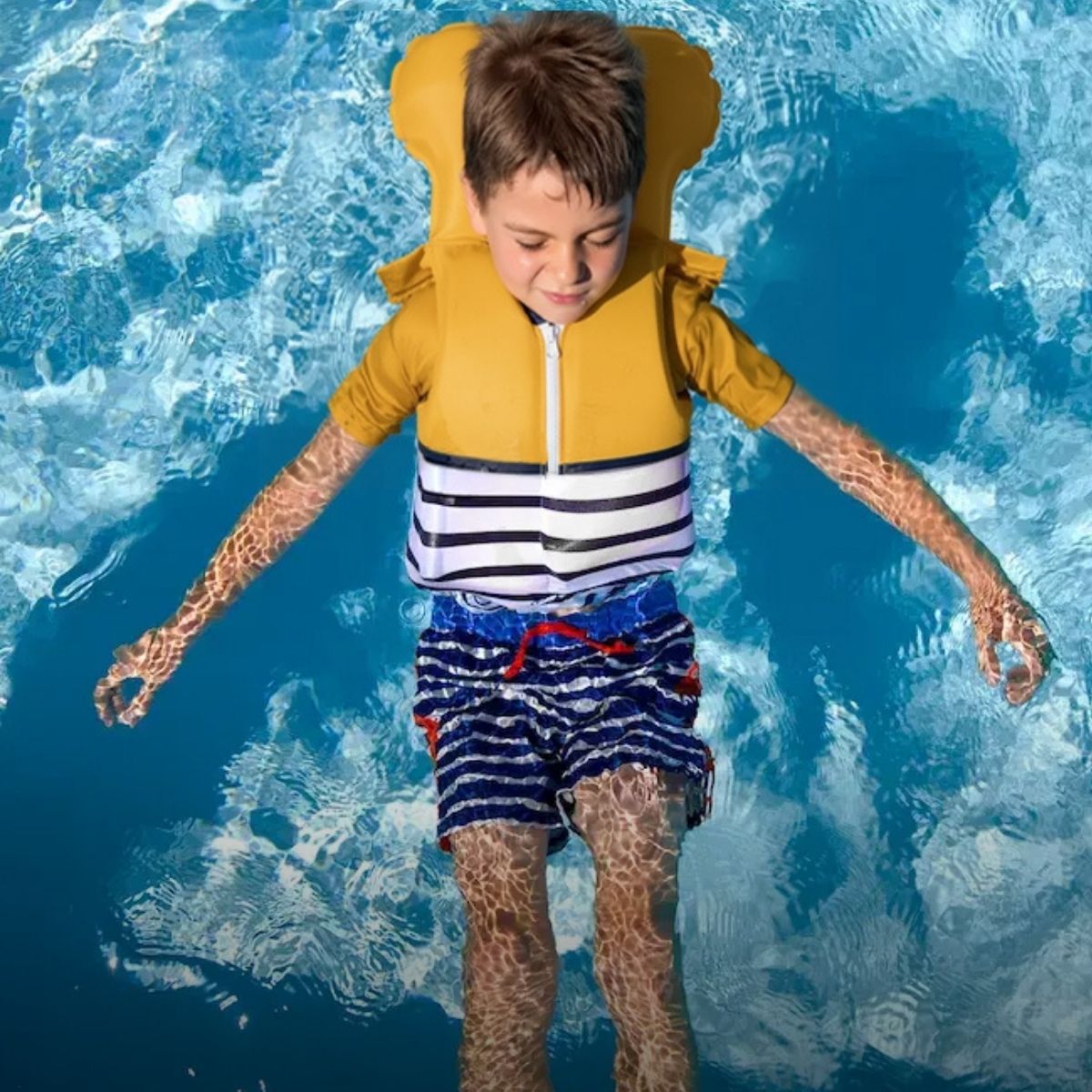
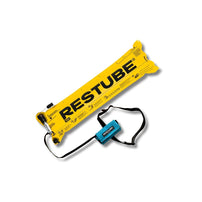
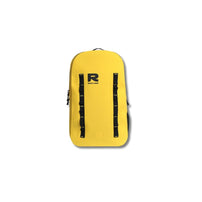
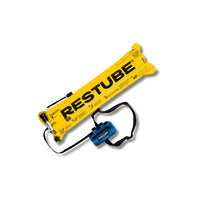
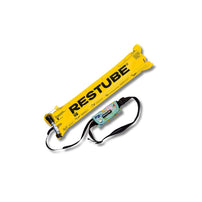
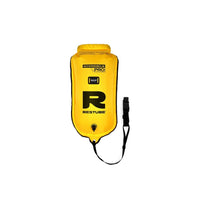
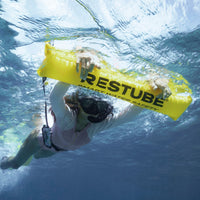
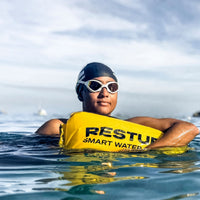
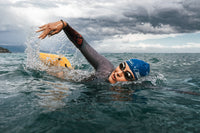
This is why behavioural rules are the first line of protection. But they have their limits. Those who also rely on technical aids - such as a buoyancy system from RESTUBE - protect themselves even when the decision has already been made.



























 Swimming
 Surfing
 Kitesurfing
 Stand Up Paddling
 Windsurfing
 Casual beach days
 On board
 Snorkeling
 Rowing
 Canoeing & Kayaking
 Fishing
 Professional Rescue
 Sea
Sea
 River
River
 Lake
Lake
 Stream/Creek
 Pond
Pond
 Canal
Canal


