







Angler casting from a rocky coastline at sunset under a pink and orange sky, with other anglers on a rock ledge in the distance.
Fishing

Water Safety Guide for Fishing

From soft riverbanks to rough seas: everything you need to know about fishing safety. Discover the most common hazards when fishing from the shore, in waders or by boat. Get practical tips from professional angler Jörg Ovens, and find the right safety gear for every trip.
Jörg Ovens RESTUBE
Experts · Fishing
Jörg Ovens · Professional Angler & Fishing Expert & RESTUBE · Water Safety Company

300 million

people worldwide go fishing every year.

United Nations, World Ocean Assessment III

32%

of all recreational boating deaths in the US happened while fishing, which is nearly 1 in 3

US Coast Guard, Recreational Boating Statistics 2024

Only 15%

of anglers wear a buoyancy aid every day.

RESTUBE Water Safety Study 2026

Hazards in Detail

When Things Tip Over

Most accidents happen where you least expect them: on the shore, at the quay wall, one step into the water. In wet gear, you often can't get out on your own. Here's what can happen, and how you stay in control.

  • Fallen in?

    Fallen in?

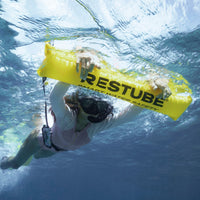
    A misstep on a quay wall, a slip on a steep bank or slippery rocks, a lurch in the boat or on your SUP board – and you're in the water, often in a split second. In cold water, wet clothing or waders, even a short distance back can turn serious. Stay calm, pull the trigger on your RESTUBE buoy for instant buoyancy, and get your bearings until you're back in the boat, on your board or ashore.

  • Stuck in soft ground?

    Stuck in soft ground?

    The bottom can look firm, yet hide a metre of soft mud – especially on the inside of river bends. One careless step and you sink in and get stuck. Don't pull hard on your legs, it only drags you deeper. Instead pull the trigger on your RESTUBE buoy, lean back and work your legs free slowly.

  • Loss of orientation?

    Loss of orientation?

    Fog, glare, murky water or a long day out can make it surprisingly hard to know where you are. Whether you’re wading far out while fishing, swimming in open water, surfacing after a dive or tumbling through whitewater after a wipeout, one wrong direction quickly costs you energy and time. Underwater, follow your leash or let your buoyancy pull you up. At the surface, stop, lean over your buoy and find a fixed point on shore. Always remember where you entered the water, because that’s often your safest way back.

  • Far from shore?

    Far from shore?

    On the water, distances are deceptively short. Wind, current, or your own enthusiasm can carry you further from shore than you realize. If the way back is suddenly too far, every minute costs you energy, and in cold water your strength fades even faster. Signal for help with your bright-colored RESTUBE buoy, and use it to swim back to shore while saving your strength.

  • Unexpected current?

    Unexpected current?

    On coastlines, in rivers or tidal waters, a current can pull you away faster than you can swim, even if you're a strong swimmer. Fighting straight against it drains your energy in minutes. Stay calm: at the coast, swim parallel to the shore until the pull eases, then head back. In a river, float on your back with your feet up and pointing downstream and work your way diagonally toward the bank. On a board, stay on it and paddle across the current instead of against it. If you need a break or help, lean on your buoy and use it to make yourself seen.

  • Sudden weather changes?

    Sudden weather changes?

    Weather on the water can change within minutes: dark clouds, rising wind or a storm often give little warning. Out on the water, you feel the effects especially fast. Watch the sky, head in early, and use your buoy so you can be spotted quickly if you need help.

  • Rough water conditions?

    Rough water conditions?

    Chop, gusts or swell can quickly turn a relaxed time on the water into a real test of strength. Control and balance get harder, and mishaps pile up. In these conditions, pushing on often isn't safe anymore. Get off the water as soon as you can, and let your buoy help you stand out clearly between the waves.

  • Overconfident?

    Overconfident?

    Especially in calm conditions or as your experience grows, it's easy to overestimate what you and your skills can handle in the water. That leads you to misjudge risks – particularly combined with wind, current, waves or cold water. Never underestimate the power of the water, and always wear your Safety Buoy, even when you feel confident.

  • Had a drink?

    Had a drink?

    Never drink alcohol if you plan to be on the water afterward. It slows your reactions, which can be very dangerous in a real emergency.

  • No buddy?

    No buddy?

    Going out on your own may feel like freedom, but if something goes wrong, no one is there to notice or help. Whether you're swimming, surfing, paddling or fishing, the safest choice is always to head out with a buddy. If you do go alone, tell someone your plan, stay close to the shore and always carry your buoy as a backup.

Expert Voice

What Our Experts Say

Jörg Ovens

Jörg Ovens

Professional Angler & Fishing Expert

When you're fishing, things can turn quickly, and often you can't make it back on your own. The RESTUBE Safety Buoy has already helped me rescue myself several times. It gives me a sense of safety, for myself and for others. Today, it's as much a part of my gear as my rod and bait.

READ EXPERT ARTICLE
Safety Tips for Fishing

Before you cast your line

Safety Tips for Fishing

A few simple habits make all the difference when fishing. Here's how to stay safe from the shore to the boat.

  1. Check the weather

    Check the forecast before you go fishing and keep an eye on the sky – conditions can change quickly. If the wind picks up or a storm rolls in, pack up and leave the water in good time. Never fish during a thunderstorm: lightning can strike even before the storm arrives, and your carbon rod can act like a lightning conductor.

  2. Wear flotation

    When fishing from a boat or wading into deep water, always wear a life jacket. An inflatable RESTUBE Safety Buoy adds an extra layer of safety: in wet clothes you often can't get back into the boat on your own, and the buoy keeps you afloat until help arrives.

  3. Fish with a buddy

    Fishing with a buddy is always safer. If you do go alone, tell someone exactly where you'll be and when you expect to be back. Carry a charged phone in a waterproof pouch on your body, and pack a first aid kit and any emergency medication you need.

  4. Wear bright colors

    Wear bright colors like red or orange by the water, and choose neon colors with reflective details at dusk or after dark. If you fall in, rescuers will spot you faster.

  5. Watch your footing at the edge

    Keep your distance from quay walls and steep banks. The water gets deep right at the edge, and with nothing to hold on to, it's hard to climb out on your own. On rock embankments, move slowly and carefully – the stones are often extremely slippery.

  6. Take extra care after dark

    Street fishing often happens after dark, for example in harbors. Falling into cold, deep water is especially dangerous then, because it's much harder for anyone to see you.

  7. Know the water

    Only wade into water you know. Even if you can see the bottom, there may be deep, soft mud underneath. In rivers, mud and weeds build up in the inner bends, so test every step before you shift your weight. In outer bends the bottom is usually firm, but the current is stronger.

  8. Remember your entry point

    When wading, remember exactly where you entered the water. Often only one ford or ridge leads you safely back to shore.

  9. Look up before you cast

    Watch out for overhead power lines. Most modern rods are made of carbon fiber, which conducts electricity extremely well. Keep your rod well away from cables.

  10. Know what to do in an emergency

    If you fall in, don't panic: pull the trigger on your RESTUBE Safety Buoy, lean on it and let your breathing settle, then call for help. And your buoy isn't just for you – if someone else gets into trouble, you can pass it to them too.

In An Emergency

The Drowning Chain of Survival: What To Do in an Emergency

Drowning happens in stages, not all at once – and at every stage, there's still a way to stop it. These are the five links of the Drowning Chain of Survival, condensed for this activity.

The Drowning Chain of Survival: What To Do in an Emergency
  1. 1. Prevent Drowning 1
    1. Prevent Drowning

    Be safe in, on and around water. The most effective link in the chain is the one that stops an emergency from happening in the first place: know the conditions, know your limits, and don't head out alone if you can avoid it.

    In practice for this activity: Never wade into water you don't know. Even if you can see the bottom, soft mud underneath can trap you in seconds.

    Step 1: Prevention Against Drowning: One of the Most Effective Links in the Rescue Chain
  2. 2. Recognize Distress 2
    2. Recognize Distress

    A person in trouble rarely looks like it does in films: little shouting, little waving, often just a quiet struggle at the surface. Knowing the signs means reacting sooner and asking someone to call for help.

    Step 2: Why Drowning Happens in Silence: Recognizing Distress and Raising the Alarm
  3. 3. Provide Flotation 3
    3. Provide Flotation

    Before anything else, the person needs flotation, their own or from outside, to prevent submersion. Flotation costs no strength and buys time.

    In practice for this activity: In waders and wet clothes, you move slowly, and climbing out becomes a real struggle. Carry flotation you can activate in seconds, so you stay afloat until you find a way out.

    Step 3: Provide Flotation: Why Buoyancy Saves Lives When Drowning
  4. 4. Remove From Water 4
    4. Remove From Water

    Only if it's safe to do so. Getting the person out of the water matters, but not at the cost of a second person in danger.

    In practice for this activity: If someone falls in, stay on land and use what you have: reach out with your landing net or pass them your Safety Buoy, following the Reach-Throw-Wade-Row-Go principle. Then guide them to a ladder, steps or a shallow spot where they can climb out.

    Step 4: Assisted Rescue: How to Help Safely Without Putting Yourself at Risk
  5. 5. Provide Care 5
    5. Provide Care

    As needed: call emergency services, check breathing, start CPR if necessary and don't stop until help arrives. What happens on land in the first minutes often decides the outcome.

    Step 5: Drowning First Aid: ABCDE Assessment, Rescue Breathing, and CPR Done Right
Your Safety Gear for Fishing

WHAT YOU NEED BY THE WATER

Your Safety Gear for Fishing

Whether you're casting from the shore, wading into the sea or heading out by boat, your safety gear should be as reliable as your rod. Compact enough to wear all day, ready in seconds when it counts.

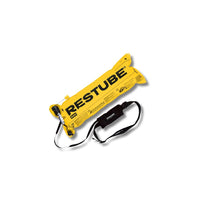
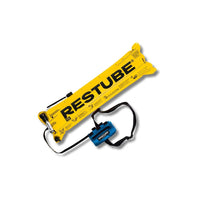
  • SAFETY BUOY EXTREME
    SAFETY BUOY EXTREME

    SAFETY BUOY EXTREME

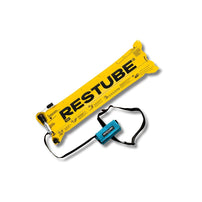
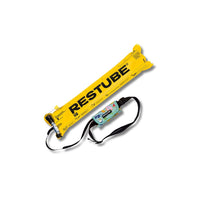
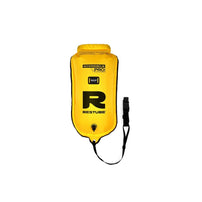
    Built for the moments when conditions get tough. Wind, waves, sharp rocks or a sudden fall: The RESTUBE Safety Buoy EXTREME is made from extra robust materials and stays reliable where others reach their limits. A split pin prevents accidental activation, even during powerful moves, and with one pull you get 75 N of buoyancy in seconds. The integrated whistle helps you get noticed. Compact on your belt and always at hand.

    Our Recommendation SAFETY BUOY EXTREME
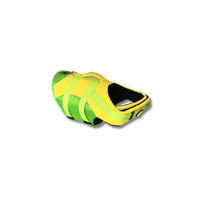
  • LIFEJACKET BOAT
    LIFEJACKET BOAT

    LIFEJACKET BOAT

    Your automatic backup for every trip on the water. Whether you're fishing, paddling or out on a motorboat, the Lifejacket BOAT inflates automatically as soon as you hit the water, even if you're injured or in shock. With 165 N of buoyancy, it keeps your head above water and gives you time until help arrives. The UML inflator reacts to immersion, not to rain or spray, and you can also trigger it manually. Slim enough to forget you're wearing it, until the moment you need it.

    Our Recommendation LIFEJACKET BOAT
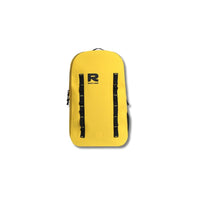
  • LIFEJACKET SAIL

    LIFEJACKET SAIL

    Made for rough seas and long days offshore. The Lifejacket SAIL inflates automatically on contact with water and gives you 165 N of buoyancy, even if you fall overboard unexpectedly. Its integrated harness lets you clip in a safety line and stay connected to the boat in wind and waves.

    Our Recommendation LIFEJACKET SAIL
Go or No-Go

Self-Check

Go or No-Go

Check yourself, check the water, then decide where and how to fish today.

Suitable for

  • Bank fishing on firm ground, keeping a safe distance from the edge
  • Wading in water you know, with a firm bottom and your entry point in mind
  • Boat fishing with a life jacket on and a ladder or step to get back aboard
  • Street fishing at spots with ladders or steps nearby
  • Every style of angling, ideally with bright clothing and your Safety Buoy

 Better not if

  • You'd have to wade in unknown or murky water, or on the inside of a river bend, without testing every step
  • You're wading at the coast in building surf or with the tide coming in
  • You're fishing alone from quay walls at night, far from any ladder
  • You'd have to cross slippery rocks or embankments to reach your spot
  • You're heading out by boat without a life jacket or a plan to get back aboard

FAQ: Fishing

Everything you've wondered about fishing safety, answered simply and to the point.

Water Safety Guide

More articles about Fishing

  • Suction Currents At Weirs And Locks: The River Hazards That Are Hard to Escape
    BASICS & RISKS

    Suction Currents At Weirs And Locks: The River Hazards That Are Hard to Escape

    While dramatic phenomena like large hydraulic rollers or rapids often attract attention, the more common and realistic danger in many central European rivers lies at fixed structures such as locks, weirs, and water outlets. Here, eddies and vertical suction currents develop, making these spots particularly misleading for swimmers and water sports enthusiasts - hard to see and often limited to very small areas.

    2 min

    212

    READ ARTICLE →
  • Tides In Theory: Ebb, Flow And Their Impact On Water Sports
    BASICS & RISKS

    Tides In Theory: Ebb, Flow And Their Impact On Water Sports

    The sea never stops moving. Tides shape every coastline, every current, and every decision you make in the water. Yet most people who swim, surf, or kitesurf have never truly understood them. This guide breaks explains tides work and why understanding them is the first step to staying safe.

    3 min

    197

    READ ARTICLE →
  • Understanding Hydrodynamics: Currents, Surf And Water Movement
    BASICS & RISKS

    Understanding Hydrodynamics: Currents, Surf And Water Movement

    Water is never passive - it carries, pushes, and pulls. Beneath every calm surface, invisible forces are constantly at work, shaping currents, surf, and water movement in ways most people never notice. Understanding how water moves, why certain spots are far more dangerous than they appear, and how to recognise and respond to them can make all the difference when it matters most.

    4 min

    143

    READ ARTICLE →