















Introduction
Water Safety Study
Survey of 1,834 water sports enthusiasts in Germany, Austria and Switzerland (2026) – and what the DLRG’s drowning statistics reveal.
-
 WATER SAFETY STUDYRead Article →
Safety Guide Study Analysis
Six out of ten people who regularly spend time in, on or around water have already experienced a critical situation. More than a third go into the water without any flotation aid at all. And almost four out of five are convinced that schools and media address the topic of water safety far too little.

1. Chapter
Basics & Risks
Over 300,000 people drown every year. Most of them didn't see it coming - and most of it was preventable. This chapter explains how drowning actually happens, what risk factors to know, and what you can do before you ever enter the water.
-
 BASICS & RISKSRead Article →
Understanding Hydrodynamics: Currents, Surf And Water Movement
Water is never passive - it carries, pushes, and pulls. Beneath every calm surface, invisible forces are constantly at work, shaping currents, surf, and water movement in ways most people never notice. Understanding how water moves, why certain spots are far more dangerous than they appear, and how to recognise and respond to them can make all the difference when it matters most.
-
 BASICS & RISKSRead Article →
Dangerous River Currents: How To Spot Eddies, Weirs & Hidden Current Traps
In Germany, 153 people drowned in rivers and streams in 2025 (DLRG Drowning Statistics) - making flowing water the leading environment for drowning deaths. Currents in rivers are rarely uniform. Particularly in areas where the natural or man-made structure of the river changes, complex and often chaotic current patterns develop. This includes river bends, bridge pillars, weirs, locks, and other structures. It is precisely at these points that many accidents occur, because the forces at work there are difficult to detect and exceptionally strong.
-
 BASICS & RISKSRead Article →
Suction Currents At Weirs And Locks: The River Hazards That Are Hard to Escape
While dramatic phenomena like large hydraulic rollers or rapids often attract attention, the more common and realistic danger in many central European rivers lies at fixed structures such as locks, weirs, and water outlets. Here, eddies and vertical suction currents develop, making these spots particularly misleading for swimmers and water sports enthusiasts - hard to see and often limited to very small areas.
-
 BASICS & RISKSRead Article →
Tides In Theory: Ebb, Flow And Their Impact On Water Sports
The sea never stops moving. Tides shape every coastline, every current, and every decision you make in the water. Yet most people who swim, surf, or kitesurf have never truly understood them. This guide breaks explains tides work and why understanding them is the first step to staying safe.
-
 BASICS & RISKSRead Article →
Tides In Practice: How To Assess Coastal Dangers
The sea never stops moving and neither does the risk. Knowing how tides work is one thing. Recognizing what they actually do to you in the water is another. This guide takes tidal knowledge into the real world: what happens when tides, wind, and waves combine, how to spot the moment you are losing control, and what to do before it is too late.
-
 BASICS & RISKSRead Article →
Cold Water, Storms And Visibility: What Every Water Sports Enthusiast Needs To Know
Water safety is significantly shaped by external environmental conditions: Factors that affect not only the water itself, but also the body's ability to function, react, and make decisions. What makes them particularly dangerous is that they rarely occur in isolation. Instead, they interact in ways that can increase risk exponentially. While hydrodynamic processes determine how water moves, environmental and weather conditions affect physical resilience, perception, and reaction time - making them just as critical to understand.


2. Chapter
Prevention
Prevention is the most powerful safety tool you have. In this chapter, you'll learn how to assess conditions before entering the water, spot the early signs of physical overexertion, fuel your body correctly for swimming, stay hydrated, and protect your skin from UV exposure. Everything you need to stay safe, feel strong, and keep control - every time you go in.
-
 PREVENTIONRead Article →
Before You Go In: How to Read the Water and Stay Safe
Rescue professionals don't rely on intuition alone. They follow a clear observation logic: analyse the environment, interpret the signs, then decide. In this guide, you'll learn exactly that - from reading the water surface and assessing wind direction to the swimming safety rules that save lives. Because safety doesn't start in the water. It starts the moment you decide to enter.
-
 PREVENTIONRead Article →
Drink, Eat, Swim, Repeat: The Complete Hydration and Nutrition Guide for Swimmers
Swimming demands more from your body than most people realize. Whether you train seriously or simply enjoy a relaxed session at the pool, what you eat and drink has a direct impact on how you feel in the water and how quickly you recover afterwards. The right nutrition before training fuels your performance. The right nutrition after training rebuilds your muscles. And staying hydrated throughout makes the difference between sharp focus and early fatigue. This guide covers everything swimmers need to know: from calorie requirements and meal timing to the truth about the post-swim snack and why the old myth about swimming after eating is long overdue for a rethink.
-
 PREVENTIONRead Article →
Know Your Limits: Load Management and Physical Warning Signs in Water Sports
Water is unforgiving. Those who push too hard for too long often only realise it when the body is already at its limit - and in the water, that can be dangerous. Load management is therefore not a question of performance, but of safety.
-
 PREVENTIONRead Article →
Sun Protection for Water Sports: UV Radiation, Sunscreen & UV Clothing
On the water, UV radiation hits harder than anywhere else. The water surface reflects up to 40% of radiation back at you. That means your skin is being hit from two directions at once. On top of that, water sports often mean hours of exposure with no natural shade. Your skin faces a significantly higher radiation intensity than on land - substantially increasing the risk of sunburn and long-term skin damage.


3. Chapter
Training & Education
Swimming lessons are the first step. But what really protects against drowning – a passed test or genuine knowledge? This chapter shows what modern swimming education actually means: from early water familiarization for children to swimming certificates and lifeguard training. You'll find out what Bronze, Silver and Gold really certify – and what they don't. Why even children who can swim should never be unsupervised near water. And which organisations are behind the international training standards. Safety in the water isn't created by a single measure. It grows through knowledge, training and the right decisions.
-
 TRAINING & EDUCATIONRead Article →
Early Water Safety: How to Build Swimming Confidence in Kids
When does water safety begin? Earlier than you probably think. Children who are introduced to water through play don't just develop swimming skills – they learn to read water, assess risks and trust themselves. This article explains why early water familiarization is so much more than baby swimming, what you as a parent or caregiver should keep in mind, and why even children who can swim should never be left unsupervised near water.
-
 TRAINING & EDUCATIONRead Article →
Swimming Ability vs. Water Safety: Why Knowing How to Swim Is Not Enough
Many people who drown could swim. That's not a contradiction – it's one of the most important findings in modern water rescue. Because swimming ability and water safety are not the same thing. Cold water, exhaustion, currents and stress can push even experienced swimmers to their limits within seconds. This article breaks down which factors truly matter in an emergency – and what real water competency means beyond basic swimming technique.
-
 TRAINING & EDUCATIONRead Article →
Lifeguard and Swimming Certification: Why a Swimming Badge Alone Won't Prevent Drowning
You can swim – but does that mean you're safe in the water? Swimming ability alone won't prevent a drowning accident. Modern water rescue organisations think beyond the basics: real water competency means recognising risks, assessing them, and acting – before things turn critical. What modern swimming and lifeguard training actually involves and why even a gold swimming certificate is no guarantee of safety in open water – find out here.
-
 TRAINING & EDUCATIONRead Article →
DLRG, Wasserwacht & RLSS UK: The Organisations Behind Water Safety
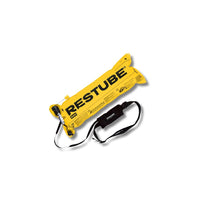
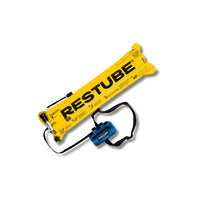
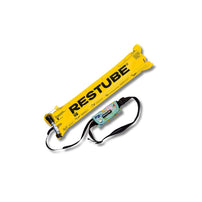
DLRG, Wasserwacht, RLSS UK – they have developed the standards for swimming education and water rescue that millions of people around the world rely on. But what do these organisations actually do? What lifeguard certifications exist – and what do they really involve? And what role do technical safety solutions like RESTUBE play in a modern water safety concept?


4. Chapter
Water Rescue & Emergency Care
Drowning is a process, not an instant – and at every stage, there's a way to stop it. This chapter walks through the full Drowning Chain of Survival: from prevention and recognizing distress, to providing flotation, self-rescue, safely helping others, and life-saving first aid. Everything you need to know to act when it matters most.
-
 WATER RESCUE & EMERGENCY CARERead Article →
Drowning Chain of Survival: How the Rescue Chain Saves Lives
Drowning is one of the biggest and, at the same time, most underestimated health problems worldwide. The World Health Organization (WHO) estimates that more than 300,000 people drown every year. This makes drowning one of the most common causes of accidental death worldwide - and among children and young adults, one of the leading causes of preventable death of all. The real number is likely much higher, since deaths caused by floods, boating accidents, or other water-related disasters are often not included in international statistics. On top of that, many survivors are left with permanent neurological damage. Drowning can therefore cause not only death, but also considerable long-term suffering.
-
 WATER RESCUE & EMERGENCY CARERead Article →
Prevention Against Drowning: One of the Most Effective Links in the Rescue Chain
Prevention is the first link in the Drowning Chain of Survival - and one of the most effective, more effective than any rescue. Find out here why swimming ability alone doesn't protect against drowning, why cold water shock is often more dangerous in the first few minutes than exhaustion, and how water competence saves lives before an emergency even begins.
-
 WATER RESCUE & EMERGENCY CARERead Article →
Why Drowning Happens in Silence: Recognizing Distress and Raising the Alarm
Drowning people don't scream, they don't wave, they don't struggle visibly - the drowning process almost always unfolds in silence. This article explains how to tell a real emergency apart from harmless splashing, why the bystander effect can turn deadly even at busy swimming spots, and why raising the alarm correctly matters just as much as recognizing the danger in the first place.
-
 WATER RESCUE & EMERGENCY CARERead Article →
Provide Flotation: Why Buoyancy Saves Lives When Drowning
Providing flotation is the third link in the Drowning Chain of Survival and, scientifically speaking, one of the most powerful. This article explains why even a small amount of extra buoyancy lowers energy consumption, makes breathing easier, and buys both the person in trouble and their rescuer more time and safety.
-
 WATER RESCUE & EMERGENCY CARERead Article →
Water Rescue Without Risk: How to Safely Save a Drowning Person
What do you do when someone is drowning? And how do you help without putting yourself in danger? This article explains why rescuers often end up in dangerous situations themselves, and how the Reach-Throw-Wade-Row-Go principle leads step by step to a safe rescue.
-
 WATER RESCUE & EMERGENCY CARERead Article →
Drowning First Aid: ABCDE Assessment, Rescue Breathing, and CPR Done Right
As the final link in the Drowning Chain of Survival, medical care after a person is removed from the water determines whether they survive and how well they recover neurologically. This article explains why resuscitation after drowning works differently than after a typical cardiac arrest, why rescue breaths come before chest compressions, and what really matters when it comes to hypothermia, lung damage, and aftercare.
-
 WATER RESCUE & EMERGENCY CARERead Article →
Self-Rescue: How Drown Proofing Can Save Your Life in the Water
What do you do if you end up in the water yourself and no one can help right away? This article explains why self-rescue is about more than being able to swim – and how breath control, energy conservation, and realistically judging your own strength can be the difference between life and death.
-
 WATER RESCUE & EMERGENCY CARERead Article →
Assisted Rescue: How to Help Safely Without Putting Yourself at Risk
You see someone in the water in distress – what now? This article explains what really matters in an assisted rescue: why self-protection comes before acting fast, how to safely hand off a rescue device and approach someone in distress the right way, and why currents like rip currents can be dangerous even for experienced rescuers.


