









300.000
people drown worldwide every year
WHO – World Health Organization (2024): Global status report on drowning prevention.
60%
have have faced a critical situation in the water, even though nearly 8 in 10 consider themselves good swimmers
RESTUBE, Water Safety Study 2026
100m
is already too far to swim for most adults who consider themselves good swimmers
Stanley et al., International Journal of Aquatic Research and Education (2024)
10°C (50 °F)
water forced half of all competent swimmers to stop early
Tipton et al., The Lancet (1999)
Hazards in Detail
When Things Get Critical in Open Water
From sudden currents to cramps and cold shock, the dangers of open water swimming often arise without warning, in lakes as well as at sea. Here's how to recognize hazards early and handle them safely.
-
Cold shock?
-
Fading power?
-
Panic?
-
Got a cramp?
-
Unexpected current?
-
Far from shore?
-
Rough water conditions?
-
Sudden weather changes?
-
Boats and other people in the water?
-
No buddy?
-
Others in need?
-
Had a drink?
Expert Voice
What Our Experts Say
Before you dive in
Open Water Swimming Safety Tips
Whether you're a beginner or an experienced swimmer, these eight water safety tips prepare you for every open water swim, from a calm lake to wild swimming in the open sea. Built on the experience of open water pros, they help you stay safe and return to shore with confidence.
-
NEVER swim alone in open waterAssisted Rescue: How to Help Safely Without Putting Yourself at Risk
-
Check the conditions BEFORE every swimBefore You Go In: How to Read the Water and Stay Safe
-
Don't fight against the currentUnderstanding Hydrodynamics: Currents, Surf and Water Movement
-
Take the cold seriouslyCold Water, Storms And Visibility: What Every Water Sports Enthusiast Needs To Know
-
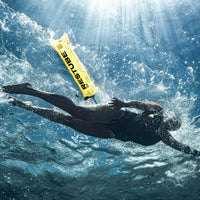
Make sure you can be seen
-
Know your limits before you startKnow Your Limits: Load Management and Physical Warning Signs in Water Sports
-
Plan breaks and refuelingDrink, Eat, Swim, Repeat: The Complete Hydration and Nutrition Guide for Swimmers
-
Stay calm instead of panickingSelf-Rescue: How Drown Proofing Can Save Your Life in the Water
In An Emergency
The Drowning Chain of Survival: What To Do in an Emergency
Drowning happens in stages, not all at once – and at every stage, there's still a way to stop it. These are the five links of the Drowning Chain of Survival, condensed for this activity.
-
1. Prevent DrowningStep 1: Prevention Against Drowning: One of the Most Effective Links in the Rescue Chain
Be safe in, on and around water. The most effective link in the chain is the one that stops an emergency from happening in the first place: know the conditions, know your limits, and don't head out alone if you can avoid it.
-
2. Recognize Distress
A person in trouble rarely looks like it does in films: little shouting, little waving, often just a quiet struggle at the surface. Knowing the signs means reacting sooner and asking someone to call for help.
In practice for this activity: As a companion, watch for silent warning signs: head low in the water, a vacant look, no forward progress. Agree on a clear emergency signal with your companion, such as a raised arm or your deployed buoy.
Step 2: Why Drowning Happens in Silence: Recognizing Distress and Raising the Alarm -
3. Provide Flotation
Before anything else, the person needs flotation, their own or from outside, to prevent submersion. Flotation costs no strength and buys time.
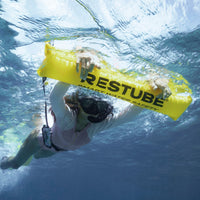
In practice for this activity: When swimming, there's no board to hold on to. Your buoy is your only source of buoyancy, for yourself and for others in need.
Step 3: Provide Flotation: Why Buoyancy Saves Lives When Drowning -
4. Remove From WaterStep 4: Assisted Rescue: How to Help Safely Without Putting Yourself at Risk
Only if it's safe to do so. Getting the person out of the water matters, but not at the cost of a second person in danger.
-
5. Provide Care
As needed: call emergency services, check breathing, start CPR if necessary and don't stop until help arrives. What happens on land in the first minutes often decides the outcome.
In practice for this activity: After swimming in cold water, your body keeps cooling down, known as "afterdrop". Change into dry, warm clothes right away, and don't make your shower too hot afterwards.
Step 5: Drowning First Aid: ABCDE Assessment, Rescue Breathing, and CPR Done Right
What you need in the water
Open Water Swimming Gear for Your Safety
From your buoy to the right accessories, good equipment won't replace experience, but it keeps you visible, supported and ready to act when every second counts. Here's the essential kit for open water and wild swimming.
-
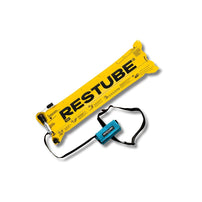
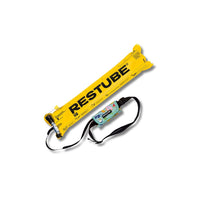
SAFETY BUOY
Our Recommendation SAFETY BUOY -
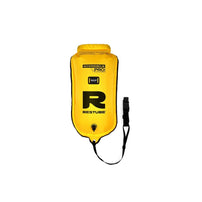
SWIM BUOY
Our Recommendation SWIM BUOY -
SWIM GOGGLES
Our Recommendation SWIM GOGGLES -
WETSUIT
Self-check
Go or No-Go
Check yourself, check the water, then decide whether to go for an open water swim.
Suitable for
- Confident swimmers who can manage longer distances in the pool without stopping, starting in calm waters close to the shore
- Triathletes and endurance athletes who want to train in real-world conditions
- Experienced open water swimmers, even in light waves or gentle currents, with a companion and a highly visible buoy
- Cold water and extreme swimmers who have gradually acclimatised to low temperatures over time
- Children who can swim confidently, only close to the shore, with additional buoyancy and under constant supervision
- Older people without pre-existing conditions, accompanied and in calm waters
Better not if
- You're on your own and no one knows where you're swimming or when you plan to be back
- Strong currents, surf, high waves, thunderstorms, fog or a sudden change in the weather are expected, and you lack the experience to handle them
- The water is colder than 15 °C and you're neither gradually acclimatised to the cold nor wearing a wetsuit
- You're tired, ill or under the influence of alcohol or medication, or have a known heart condition without medical clearance
- You'd be swimming in areas with boat traffic, in shipping lanes, or at dusk or in the dark
- The water quality is unknown, questionable or officially restricted, for example due to blue-green algae
FAQ: Open Water Swimming
Curious about open water swimming? Find answers to the most common questions about safety, equipment and swimming in lakes and the sea.
Is open water swimming dangerous?
Swim buoy or safety buoy: which is better?
What water temperature is too cold for swimming?
What should I do if I get caught in a current?
Can I go open water swimming alone?
Do I need a wetsuit for open water swimming?
What is afterdrop and how do I warm up properly?
Water Safety Guide
More articles about Swimming
-
PREVENTIONREAD ARTICLE →Drink, Eat, Swim, Repeat: The Complete Hydration and Nutrition Guide for Swimmers
Swimming demands more from your body than most people realize. Whether you train seriously or simply enjoy a relaxed session at the pool, what you eat and drink has a direct impact on how you feel in the water and how quickly you recover afterwards. The right nutrition before training fuels your performance. The right nutrition after training rebuilds your muscles. And staying hydrated throughout makes the difference between sharp focus and early fatigue. This guide covers everything swimmers need to know: from calorie requirements and meal timing to the truth about the post-swim snack and why the old myth about swimming after eating is long overdue for a rethink.
-
TRAINING & EDUCATIONREAD ARTICLE →Swimming Ability vs. Water Safety: Why Knowing How to Swim Is Not Enough
Many people who drown could swim. That's not a contradiction – it's one of the most important findings in modern water rescue. Because swimming ability and water safety are not the same thing. Cold water, exhaustion, currents and stress can push even experienced swimmers to their limits within seconds. This article breaks down which factors truly matter in an emergency – and what real water competency means beyond basic swimming technique.
-
BASICS & RISKSREAD ARTICLE →Understanding Hydrodynamics: Currents, Surf And Water Movement
Water is never passive - it carries, pushes, and pulls. Beneath every calm surface, invisible forces are constantly at work, shaping currents, surf, and water movement in ways most people never notice. Understanding how water moves, why certain spots are far more dangerous than they appear, and how to recognise and respond to them can make all the difference when it matters most.


