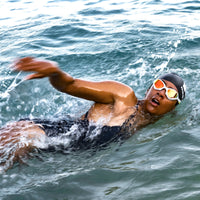
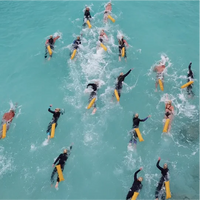
In the open sea, I'm a guest. I've swum the Ocean's Seven, seven straits around the world, becoming the sixteenth person worldwide – and the first from the German-speaking world – to complete them. After many hours in the open ocean, sometimes under extreme conditions, there's one thing I know above all: the ocean doesn't adapt to me. I adapt to it.

Facts about André Wiersig:
-
Born in Bochum, Germany, in 1972
-
First person to swim from the German mainland to Helgoland (48.5 km, 2021)
-
UN Ocean Decade ambassador and founder of the ocean initiative theBlueHeart
-
Featured in the ZDF documentary series Man of the Ocean
Never alone.
Anyone swimming far out needs company. On my crossings, a support boat always comes along to navigate and keep an eye on the weather. A kayak paddles close beside me too, since the larger boat can't come too near. Along the coast, it's often enough to have one person on shore who knows where you're swimming, what route you've planned, and when you expect to be back.

Stay visible.
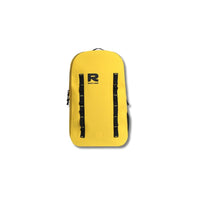
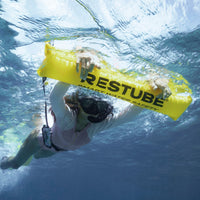
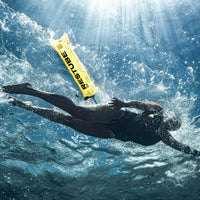
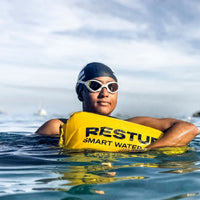
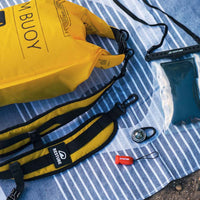
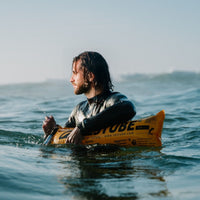
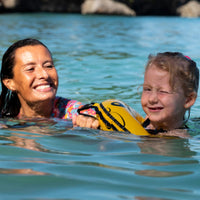
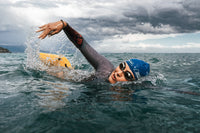
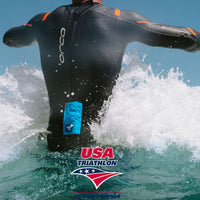
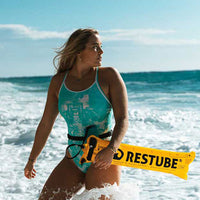
Between the waves, a head is barely visible – not to boats, not to surfers, not to rescuers. A bright swim cap and a conspicuous buoy make you visible, and in an emergency can give you extra buoyancy too.
Read the water.
Currents and tides are among the strongest forces out there. They can hold you in place for hours or carry you far off your planned route, no matter how hard you swim. I never plan a crossing without people who calculate currents and know the weather window. Before every swim, find out about tides, currents, wind, and water temperature. If you get caught in a strong current, don't try to fight it head-on. Stay calm, get your bearings, and change your route or call off the swim. In a rip current pulling you away from the beach, swim sideways out of it.

Take the cold seriously.
I always swim in just a pair of trunks. In the North Channel between Ireland and Scotland, the water was 12 °C (54 °F). My body has adapted to that over the years, but even so, cold is a danger that creeps up quietly. Never overestimate your experience, and don't wait for your body to send you clear warning signs. Anyone shivering hard, no longer thinking clearly, or unable to properly move their fingers needs to get out of the water. Ease into cold water gradually, and build up your time in it step by step.
Respect, not fear.
Out there you'll encounter jellyfish, darkness, and sometimes a shark. Fear can quickly turn into panic, and panic is a dangerous opponent in the water. Respect, on the other hand, keeps you alert. Staying calm means breathing calmly, swimming calmly, and making better decisions. The animals are at home out there. We're the visitors.

Turning back is strength.
The most important decision often isn't made at the start, but along the way. When wind and waves pick up, or your body signals its limits, stopping isn't failure. Decide beforehand when you'll turn back, and stick to it – even when the goal is already within reach. The sea will still be there tomorrow.
Anyone who swims out this prepared experiences something extraordinary: the beauty of the ocean from the most direct perspective there is. And that's exactly why it's worth making it back safely.