









Early Water Safety: How to Build Swimming Confidence in Kids
Baby Swimming & Learning to Swim: Why Play Comes First
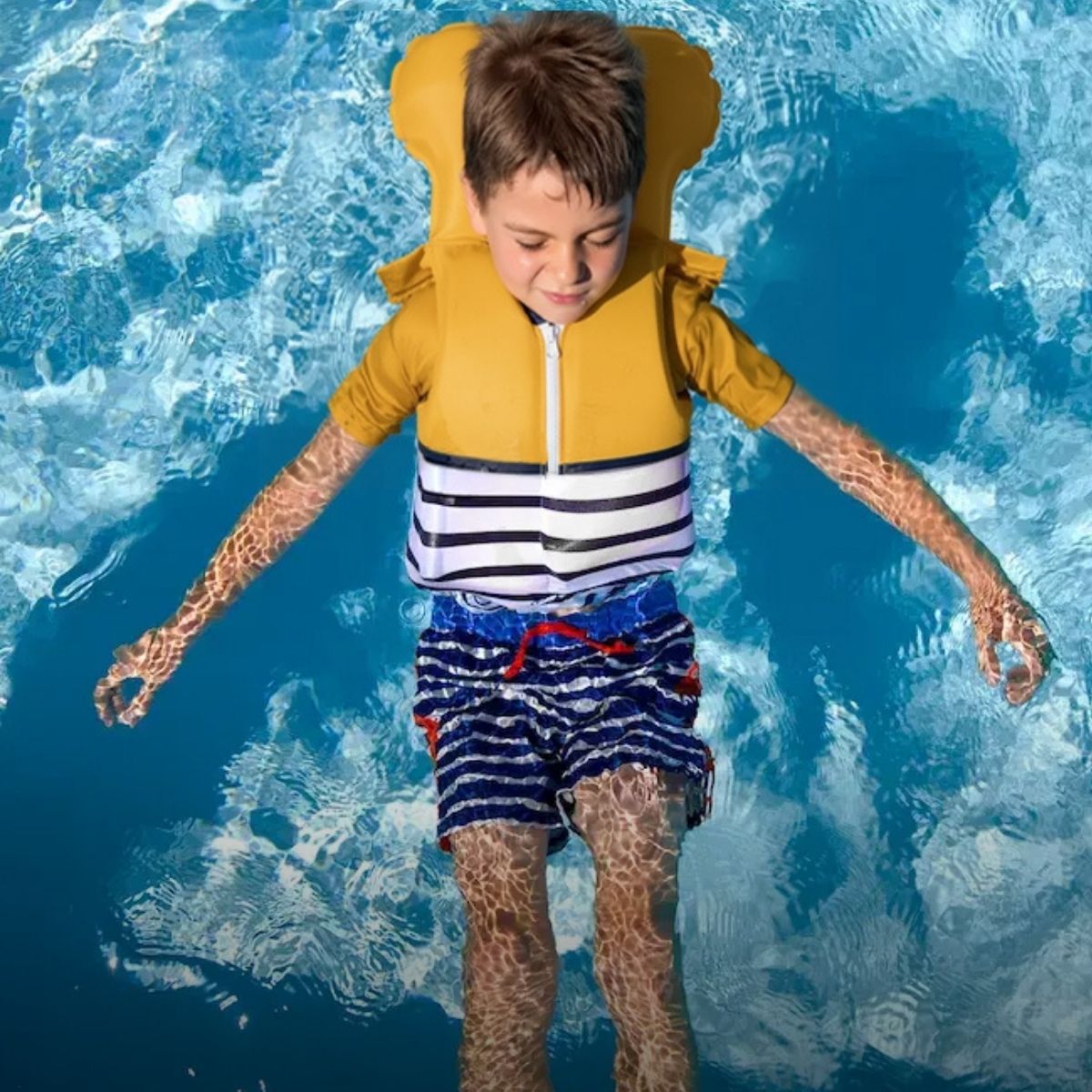
Safe behavior around water doesn't start in swimming lessons. The foundations are laid much earlier – often in the very first years of life. Developmental psychologists, educators and water rescue experts agree: early experiences with water have a lasting impact, because young children are especially open to new movement and learning experiences.
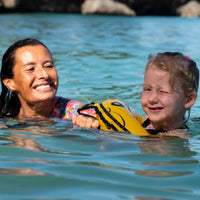
Building a positive relationship with water matters far more than mastering perfect technique. Children who experience water as something exciting and enjoyable develop confidence faster – and are more willing to learn new skills as they grow.

Whether it's baby swimming or splashing around at the lake: modern swim education deliberately embraces playful methods. Through games, movement tasks and age-appropriate challenges, children learn intuitively how water behaves and how to move within it. This kind of hands-on experience is often more valuable than drilling technical movements at an early age.
Research in motor development shows that children learn best by doing. They develop a feel for:
- Buoyancy
- Balance
- Propulsion
– by exploring different situations and finding their own solutions. Playful water familiarization therefore supports not only future swimming ability, but also motor development, body awareness and self-confidence.
Water Safety for Kids: The Risks Every Parent Needs to Know
Children perceive water risks in fundamentally different ways than adults. Developmental psychology research shows: children may recognize risks to some extent, but often cannot fully grasp the consequences. Early water familiarization therefore always means supervision.
A common misconception: baby swimming or swimming lessons for kids automatically protect against drowning. They don't. All major international organizations are clear:
Education and supervision must always go hand in hand. The World Health Organization explicitly states that even children who can swim require continuous supervision – especially near open water.

Swimming Lessons Aren't Enough: How Kids Develop Real Water Competency
You are the most important role model. Children take their cues from the adults around them. Those who handle water responsibly, explain safety rules and lead by example give children something no swimming lesson can replace.
Water competency doesn't develop in swimming lessons alone – it grows through everyday experiences, conversations and role models.
International prevention programs are clear: early water familiarization is part of a broader educational process. Children should learn to enjoy water – and at the same time learn to realistically assess its risks. Physical skills alone are not enough. Safety awareness and responsible behavior are part of it too.

