
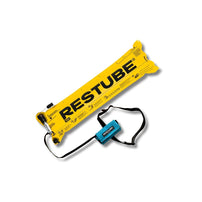
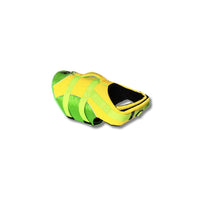
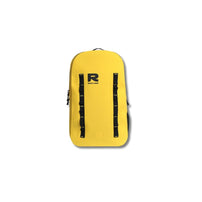
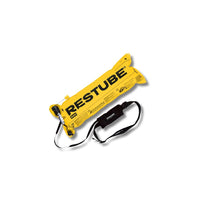
















When it comes to unlocking absolute freedom and safety in, on, and around the water, additional buoyancy is non-negotiable. But when choosing your gear, one major question stands out: What is the key difference between a safety buoy and a swim buoy, and which one is right for my activity?
Whether you are open-water swimming, stand-up paddling, or kitesurfing – the options are endless. In this guide, we break down the physics, features, and functions to help you find your perfect safety companion.
What is a Swim Buoy?
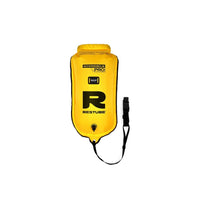
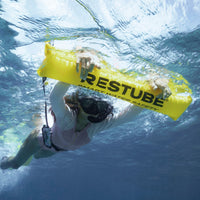
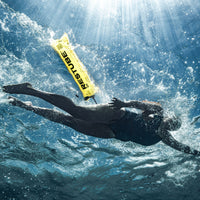
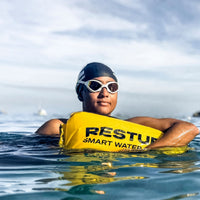
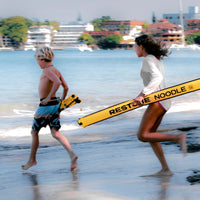
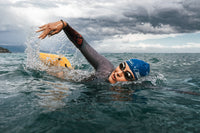
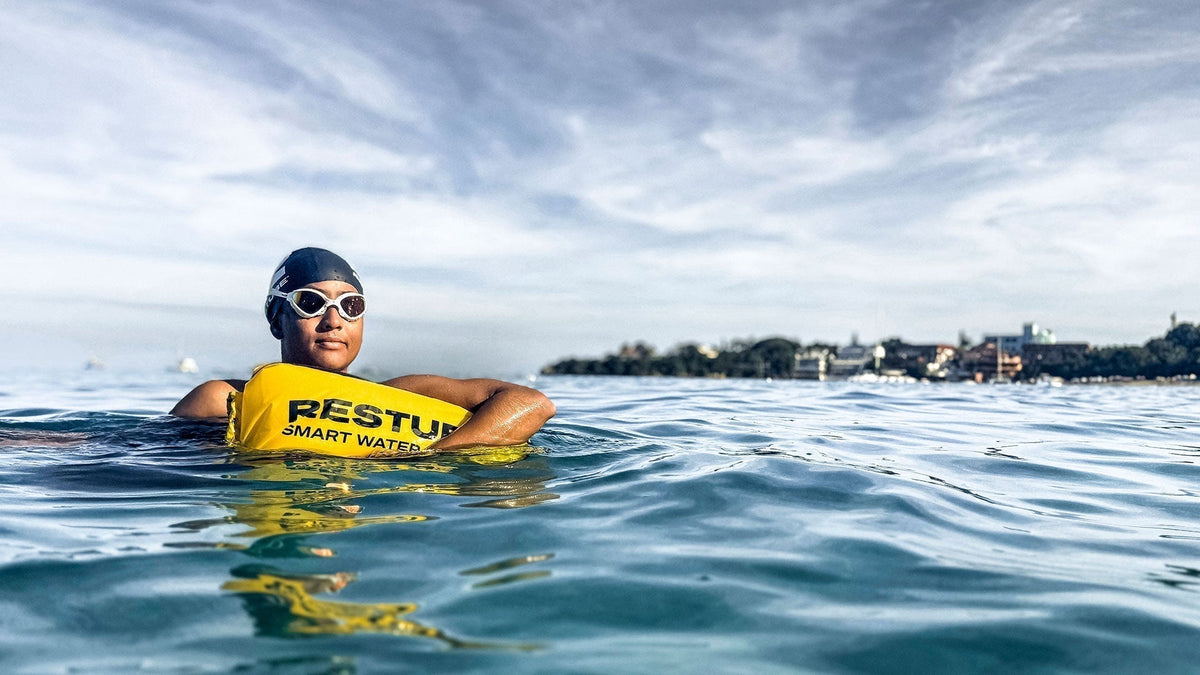
A classic swim buoy (often called a "tow float") is an inflatable float that tags along behind you on a leash, operating on the "trailer principle." Its primary job is to make you highly visible to boats, jet skis, and other water sports enthusiasts. As a bonus, many models double as a drybag, keeping essentials like your keys, phone, or energy bars completely dry. It’s simple to use: you inflate the buoy via the integrated oral valve before hitting the water. Once you’re back on land, just deflate it, roll it up, and pack it away.

Drybag, more visibility & buoyancy!
"The SWIM BUOY from RESTUBE provides buoyancy in critical situations. It hardly interferes with swimming, increases visibility and is suitable for many bodies of water. The buoy can be tested free of charge at many river and lake resorts in Switzerland."
Christoph Müller
BFU
What is a Safety Buoy?
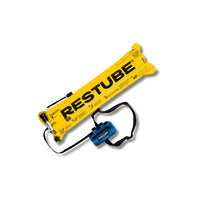
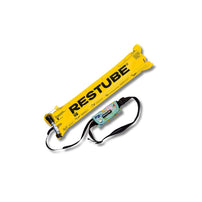
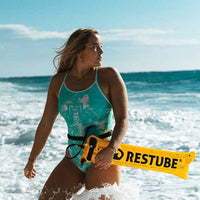
In contrast to a classic swim buoy, the safety buoy represents RESTUBE’s signature technological innovation: a smart, ultra-compact water safety system built on the airbag principle.
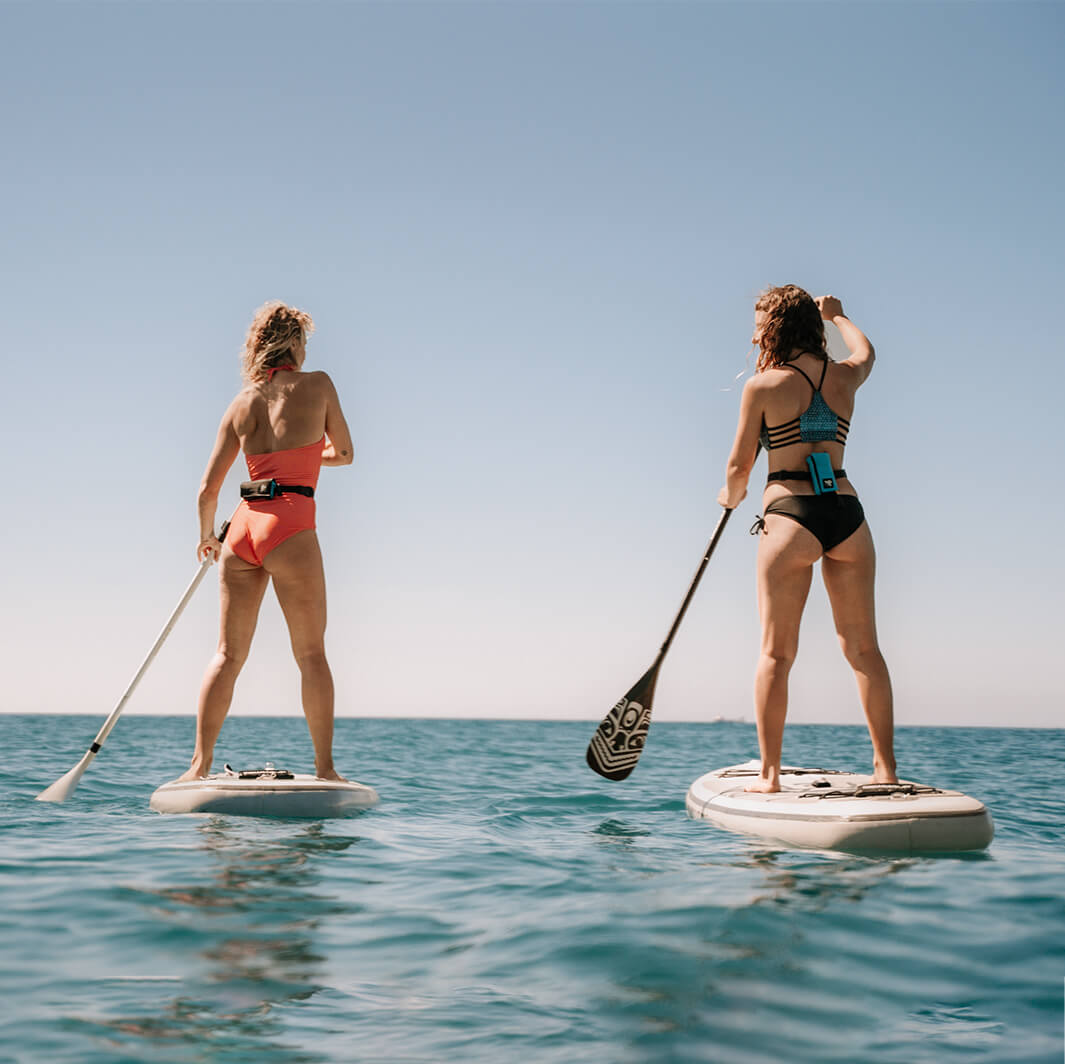
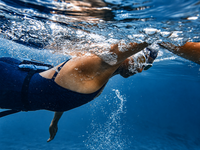
Packed inside its pouch, the safety buoy is no larger than a smartphone and rides discreetly on your waist belt. If you run into trouble, a quick pull on the trigger instantly activates a CO2 cartridge and inflates the buoy within seconds. This system is designed as a reusable "smart backup" that gives you unrestricted freedom of movement. After deployment, simply swap out the spent CO2 cartridge for a fresh one, fold the buoy back into its pocket, and it is immediately ready for your next training session or adventure.

Our bestseller! The safety buoy for versatile use!
“For me, swimming in open water means freedom without limits. RESTUBE allows me to swim further and longer.”
Loic Branda
Olympic Swimmer
The Crucial Differences Between a Safety Buoy and a Swim Buoy
To make the right choice for your next adventure, it helps to look closely at the technical and functional features. The real difference between a safety buoy and a swim buoy comes down to handling, in-water performance, and the specific type of protection each system delivers.
The Physics of Buoyancy: Why Newton Matters
Our safety buoys are available in two buoyancy classes – 50N and 75N – while our swim buoys offer even more lift at 125N. But what does this mean in practice?
Buoyancy for swim aids and life jackets is measured in Newtons (N), where 10N corresponds to roughly 1 kg (2.2 lbs) of lift. This means a standard 50N-certified buoyancy aid provides about 5 kg (11 lbs) of upward force. Because the human body already has natural buoyancy in the water due to displaced volume, 50N is typically more than enough to keep an adult’s head safely above water in calm conditions.
However, the official ISO 12402-5 standard and professional water rescue guidelines (such as the DLRG) confirm that in challenging conditions – such as heavy swells, strong currents, or when wearing heavy gear – having extra buoyancy can make all the difference.

Water Resistance & Freedom of Movement
The safety buoy is incredibly compact, sits comfortably on your belt, and only inflates when you pull the trigger – offering maximum freedom of movement and virtually no drag until you need it. The classic swim buoy, on the other hand, is inflated by the mouth before you enter the water and is towed behind you while swimming or snorkeling. It creates slightly more drag than swimming without one, but in return provides continuous buoyancy and constant visibility.

Handling in an Emergency
When things get critical, what matters is how quickly and easily you get support:
- Readiness: The swim buoy is already inflated and always within reach. The safety buoy inflates within seconds with a single pull on the trigger, ideal when sudden cramps, a strong current, or a change in weather catch you off guard.
- Visibility: An inflated swim buoy keeps you highly visible to boats and other water users at all times. The safety buoy, on the other hand, only provides this visual presence once it has been triggered.
- Two systems in one: The safety buoy can also be inflated by mouth before your swim and towed just like a classic swim buoy.
- Helping others: Both can be passed to an exhausted person nearby or used to signal rescuers.
Applications and Best Use Cases
Which system suits you best depends on your activity:
- Swimming (including open-water and ice swimming): Both systems keep you afloat during cramps or exhaustion. The swim buoy is permanently inflated and highly visible, while the safety buoy acts as a compact, virtually drag-free backup that is activated only when needed.
- Snorkeling: The swim buoy marks your position for passing boats, and the SWIM BUOY PRO keeps your valuables dry. The safety buoy gives you a backup that won't get in your way as you dive down.
- Kitesurfing, SUP, fishing & other water sports: A towed swim buoy would get in the way here. The safety buoy fits compactly on your belt without restricting your movement or athletic performance.

Maintenance, Care, and Upkeep
A major difference between safety buoys and swim buoys lies in their maintenance routines and follow-up costs. Both systems are built to last but require different levels of care:
- Safety buoy: After each deployment, you must replace the spent CO2 cartridge with a new, original cartridge. The buoy is then deflated, dried, and folded back into its pocket according to the instructions. On older versions of the safety buoy, a green safety clip on the trigger mechanism shows you at a glance if the system is ready. For models made since 2022, the mechanism has been updated: after screwing in the cartridge, you manually switch the trigger arm to green. After use in salt or chlorinated water, rinse the buoy briefly with fresh water and let it dry completely before folding and storing it.
- Swim buoy: Extremely straightforward and cost-effective, as no CO2 cartridges are required. Maintenance is limited to rinsing the buoy with fresh water to remove salt or chlorine buildup. It is vital to let the buoy dry completely before folding it flat to prevent material degradation or odors. A quick visual inspection of the oral valve ensures it remains airtight.
We prioritize sustainability across our entire range: all our products are completely PVC-free. Instead, we use high-grade nylon/TPU materials, which are not only more eco-friendly but also significantly more UV-resistant and durable than standard plastic buoys.

The RESTUBE READY Interface – Maximum Flexibility
A unique technical feature of RESTUBE’s systems is the modular READY interface.
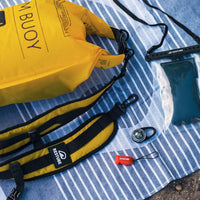
On the SWIM BUOY PRO, this READY port is located directly on the buoy, allowing you to attach accessories like waterproof phone cases or an action camera.
On the safety buoy, the READY interface lets you secure the device directly to other RESTUBE READY-compatible gear – such as a wetsuit with an integrated attachment point.
Which Safety Net Fits Your Adventure?
Every moment on the water is precious – and having the right type of buoyancy is key to unlocking absolute freedom. To help you stay focused on the experience, here is a quick guide to choosing your ideal match:
- Safety Buoys for Active Athletes: The RESTUBE range (BEACH, ACTIVE, EXTREME, PFD) is designed for high-energy water sports where dynamics and freedom of movement are essential – such as kitesurfing, windsurfing, surfing, SUP, kayaking, or fishing.
- Swim Buoys for Visibility & Comfort: The classic tow float is the perfect training partner for open-water swimmers, triathletes, and snorkelers who need to stand out clearly to passing boats.
Comparison Safety Products

Discover more RESTUBE products in comparison
Legal Classification: Certification and Carriage Requirements
Many water sports enthusiasts look for a compact alternative to a bulky life jacket specifically to satisfy regional safety laws. This is where the RESTUBE PFD comes in.
- ISO Standards: PFDs (Personal Flotation Devices) are buoyancy aids certified under the DIN EN ISO 12402-5 standard and recognized as class 50N swimming aids.
- Regional Regulations: In areas like Lake Constance or in Switzerland, carrying a buoyancy aid is legally required as soon as you venture further than 300 meters (approx. 330 yards) from the shore. A certified RESTUBE PFD fully satisfies these legal mandates, keeping you safe from fines while ensuring you enjoy unrestricted movement.
Your Match for Unrestricted Freedom on the Water
Ultimately, choosing between a safety buoy and a swim buoy depends on your activity, your need for streamlined movement, and whether you require dry storage.
The swim buoy is built for swimmers and snorkelers: permanently inflated, highly visible, and equipped with practical storage on the SWIM BUOY PRO. The safety buoy is engineered for all water sports: compact on your belt and inflated within seconds via a CO2 cartridge in an emergency. It can even be used as a traditional tow float when needed. Plus, if you are searching for a sleek, CE-certified alternative to a bulky life vest, the RESTUBE PFD is the ideal choice.
Whichever you choose: Stay safe, stay free, and enjoy every minute out on the water!