

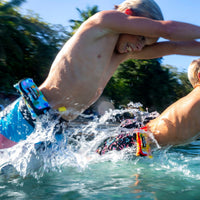

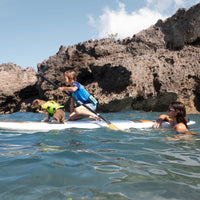
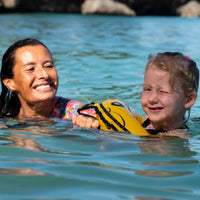



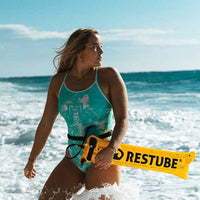
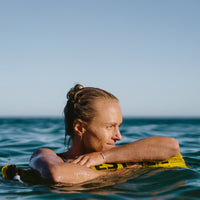
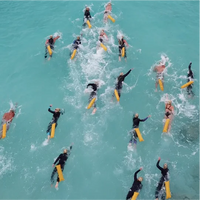
Woman and Man share a SUP, he swears the SUP, she splashes water on him
Paddle surf
FREE PDF Download available

Water Safety Guide for Stand-Up Paddling

River, lake, or sea – standing on your board puts you right in the middle of nature, close to the water, close to freedom. But out on the water, you're on your own: wind, current, and your own strength determine how safe your trip turns out to be. This guide explains what hazards can arise while stand up paddling and how to equip and protect yourself, others, and your fun on the water.
Kimo Kersting RESTUBE
Experts · Paddle surf
Kimo Kersting · Palista profesional de stand up paddle & RESTUBE · Empresa especializada en seguridad acuática

~ 500

SUP accidents per year in Switzerland

Suva

+164%

increase in SUP fatalities in the US – from 11 to 29 deaths between 2023 and 2024

US Coast Guard, Recreational Boating Statistics 2024

413

paddleboarding incidents handled by RNLI lifeguards on beaches across the UK and Channel Islands in 2024

RNLI

87%

of drowning victims in US recreational boating accidents – including SUP, kayak and canoe – were not wearing a life jacket (2024)

US Coast Guard, Recreational Boating Statistics 2024

Hazards in Detail

What Can Happen on Your Board

On a SUP, wind, current, and balance all come into play at once. That's what makes it unpredictable. The better you know the hazards, the calmer you'll stay when it counts.

  • ¿Corriente inesperada?

    ¿Corriente inesperada?

    On coastlines, rivers or in tidal areas, currents can shift faster than you can react – and unexpectedly sweep you along. Fighting straight against it just wastes your energy and exhausts you fast. Stay calm, move diagonally out of the current, lean on your buoy for support if you need to, and make yourself visible with it if you need help.

  • ¿Lejos de la costa?

    ¿Lejos de la costa?

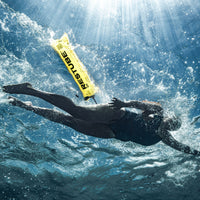
    On the water, distances are deceptively short. Wind, current, or your own enthusiasm can carry you further from shore than you realize. If the way back is suddenly too far, every minute costs you more energy. Make yourself visible with a bright-colored buoy, and use it to swim back to shore while saving your strength.

  • ¿Condiciones de aguas bravas?

    ¿Condiciones de aguas bravas?

    Chop, gusts or swell can quickly turn a relaxed time on the water into a real test of strength. Control and balance get harder, and mishaps pile up. In these conditions, pushing on often isn't safe anymore. Make yourself visible with your buoy and get off the water as soon as you can.

  • ¿Potencia decreciente?

    ¿Potencia decreciente?

    Whether you're swimming, paddling, or riding the wind at your back: out on the water, your strength can fade faster than you'd expect – current, distance, or cold all drain your reserves even more. With RESTUBE, instant buoyancy is always within reach – to catch your breath, or to keep you afloat when it really matters.

  • ¿Pánico?

    ¿Pánico?

    Falling into cold water, an unexpected wave or losing your bearings can send even experienced water sports enthusiasts into a brief moment of panic. Panic makes you react in a rushed, energy-draining way – the opposite of what you need. Breathe deliberately, lean on your buoy, and wait for your pulse to settle before you act.

  • ¿Problemas circulatorios?

    ¿Problemas circulatorios?

    Exertion, heat or cold water take a bigger toll on your circulation than you'd think – out on the water, you often notice it later than you should. Dizziness or nausea is a clear signal to slow down or take a break immediately. Stay hydrated, rest when you need to, and pull your RESTUBE safety buoy for instant buoyancy if things get serious.

  • ¿Ha perdido o roto su equipo?

    ¿Ha perdido o roto su equipo?

    A broken paddle, a snapped line or lost gear suddenly leaves you without propulsion or a connection to your equipment – an uncomfortable spot out on the water. Without your gear, even the short way back gets exhausting. Your RESTUBE safety buoy keeps you afloat and visible while you make your way back.

  • Fall into the water?

    An unplanned fall into the water can happen anywhere – off a board, out of a boat, or during a maneuver. Usually harmless, but in wind, waves or cold water, suddenly being separated from your gear can turn serious. Stay calm, let your RESTUBE buoy give you instant buoyancy, and get your bearings until you're back aboard or ashore.

  • ¿Cambios meteorológicos repentinos?

    ¿Cambios meteorológicos repentinos?

    Weather on the water can change within minutes: dark clouds, rising wind or a storm often give little warning. Out on the water, you feel the effects especially fast. Watch the sky, head in early, and make yourself visible with your buoy if you need help quickly.

  • ¿Tu perro está aprendiendo a nadar?

    ¿Tu perro está aprendiendo a nadar?

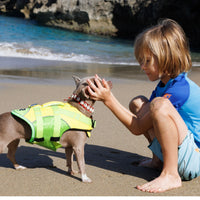
    On first contact with water, your dog can quickly feel overwhelmed – they panic, swallow water, or swim too far out without properly judging their own strength. The high buoyancy of the RESTUBE Dog Life Jacket gives them stability and confidence, so they swim more relaxed and tire less quickly. Bright colors and reflective details also keep them clearly visible in waves or at dusk, and the built-in carry handle lets you get them out of the water quickly and safely in an emergency.

  • ¿Tu perro es mayor o está enfermo?

    ¿Tu perro es mayor o está enfermo?

    Older or sick dogs tire faster in the water and often have less strength left in their legs and joints. The RESTUBE Dog Life Jacket relieves the strain with high buoyancy and an optimal swimming position, while the soft padding and side-adjustable fit sit comfortably even on sensitive skin. The built-in carry handle lets you bring your dog back on board or to shore quickly and without stress in an emergency.

  • ¿Alcohol o exceso de confianza?

    Never drink alcohol if you plan to be on the water afterward. It slows your reactions, which can be very dangerous in a real emergency.

Safety Tips for SUP

Before You Step on Your Board

Safety Tips for SUP

These eight tips prepare you for any SUP session – from a calm lake to choppy waves. Knowing and following them significantly lowers your risk of ending up in a critical situation.

  1. Assess your own skills realistically & train your technique

    Be honest about what you can handle, and practice safe turning as well as staying calm in stressful situations – like when a boat is heading your way. For beginners, SUP national team athlete Kimo Kersting recommends taking a beginner's course.

    Saber nadar vs. seguridad acuática: por qué saber nadar no es suficiente
  2. Paddle AGAINST wind and current first

    Especially as a beginner, start out paddling against the wind and current, even if it feels more strenuous. That way, you won't run out of energy on the way back.

    Conoce tus límites: Gestión de la carga y señales de advertencia físicas en los deportes acuáticos
  3. Check conditions and area before you go in

    Before you start, get an overview of wind strength, current, and weather developments in your area. These external factors are exactly what's often underestimated in SUP – yet they're crucial, precisely because you're out in the middle of nature.

    Agua fría, tormentas y visibilidad: lo que todo aficionado a los deportes acuáticos necesita saber
  4. Share your route – never paddle unnoticed

    Tell someone on land where you're paddling and when you plan to be back. That way, if something goes wrong, someone knows where to start looking.

  5. Choose the right leash for the type of water

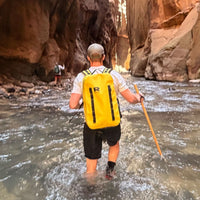
    On flat water and in waves, an ankle leash works well; on rivers or whitewater, use a quick-release waist leash instead. That way, your board won't drift away, and the leash won't get caught on obstacles underwater.

  6. Wear an additional buoyancy aid

    An additional buoyancy aid like the RESTUBE PFD gives you extra safety – for SUP, a CE-certified buoyancy aid is even legally required beyond 300m from shore in some places, such as Lake Constance or Switzerland.

    Proporcionar Flotación: Por Qué la Flotabilidad Salva Vidas en un Ahogamiento
  7. Protect yourself from cold and sun

    Sunscreen and UV-protective clothing are essential on a SUP, since water reflects up to 30% of UV radiation. In cold water, a wetsuit slows heat loss and helps protect you from hypothermia.

    Protección solar para deportes acuáticos: radiación UV, crema solar y ropa UV
  8. Eat and drink enough for longer tours

    Before longer tours, eat a light, easily digestible meal and pack a snack to take with you – drink regularly in small sips while paddling, too. Paddling hungry or dehydrated makes you tire faster and slows your reactions in critical situations.

    Bebe, Come, Nada, Repite: La guía completa de hidratación y nutrición para nadadores

In An Emergency

The Chain of Survival: What To Do In An Emergency

Drowning happens in stages, not all at once – and at every stage, there's still a way to stop it. These are the five links of the Chain of Survival, condensed for this activity.

The Chain of Survival: What To Do In An Emergency
  1. 1. Prevent Drowning 1
    1. Prevent Drowning

    Be safe in, on and around water. The most effective link in the chain is the one that stops an emergency from happening in the first place: know the conditions, know your limits, never go in alone.

    Step 1: Prevención del Ahogamiento: una de las Medidas Más Eficaces
  2. 2. Recognize Distress 2
    2. Recognize Distress

    A person in trouble rarely looks like it does in films: little shouting, little waving, often just a quiet struggle at the surface. Knowing the signs means reacting sooner and asking someone to call for help.

    Step 2: Por Qué el Ahogamiento Ocurre en Silencio: Reconocer la Señal de Alerta y Dar la Alarma
  3. 3. Provide Flotation 3
    3. Provide Flotation

    Before anything else, the person needs flotation, their own or from outside, to prevent submersion. Flotation costs no strength and buys time.

    Step 3: Proporcionar Flotación: Por Qué la Flotabilidad Salva Vidas en un Ahogamiento
  4. 4. Remove From Water 4
    4. Remove From Water

    Only if it's safe to do so. Getting the person out of the water matters, but not at the cost of a second person in danger.

    Step 4: Rescate Asistido: Cómo Ayudar de Forma Segura sin Ponerte en Peligro
  5. 5. Provide Care 5
    5. Provide Care

    As needed: call emergency services, check breathing, start CPR if necessary and don't stop until help arrives. What happens on land in the first minutes often decides the outcome.

    Step 5: Primeros Auxilios en el Ahogamiento: Evaluación ABCDE, Respiración de Rescate y RCP Bien Hecha
Safety Equipment for Stand-Up Paddling

What You Need on the Water

Safety Equipment for Stand-Up Paddling

Good gear won't replace experience or common sense, but it can give you the crucial seconds to react in an emergency.

  • Inflatable Safety Buoy
    Inflatable Safety Buoy

    Inflatable Safety Buoy

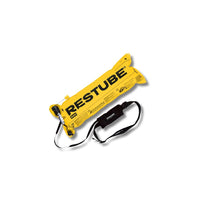
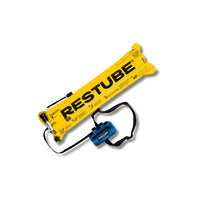
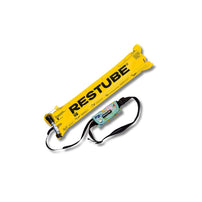
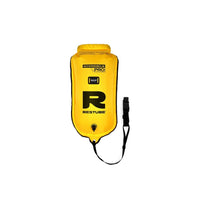
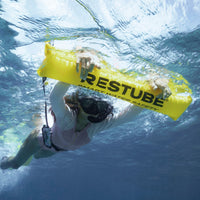
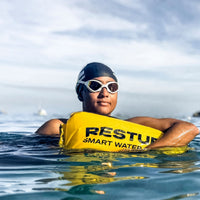
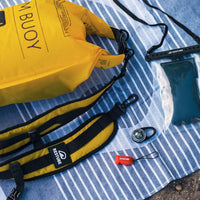
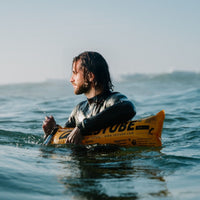
    The Safety Buoy is stored compactly in a belt pouch, so you don't even notice it while paddling. In an emergency, simply pull the trigger and the buoy fills with CO₂ in seconds, giving you instant buoyancy if you fall into the water or need a break. The built-in signal whistle also helps you get noticed if you need help.

    Our Recommendation Inflatable Safety Buoy
  • Personal Flotation Device (PFD)
    Personal Flotation Device (PFD)

    Personal Flotation Device (PFD)

    This PFD is a particularly light and compact buoyancy aid that won't hold you back while you're active on the water. It's CE-certified with 50 N of buoyancy per DIN EN ISO 12402-5 / DIN EN ISO 12402-6 and is especially suited for places where a certified buoyancy aid is legally required for SUP, such as Lake Constance or across Switzerland. Thanks to the SUP Safety Leash Connector, it can be connected directly to your leash.

  • Wetsuit

    A wetsuit, e.g. from Synergy are recommended for water temperatures below 18°C (64°F): it slows down heat loss in the water and, thanks to its closed-cell neoprene structure, also improves your natural buoyancy. The right thickness depends on the water temperature: 2–3 mm up to about 18°C, 4/3 mm between 10 and 18°C, and 5/4 mm or more below 10°C.

  • Safety Leash

    Safety Leash

    The safety leash connects you to your board so you don't get separated in an emergency. On calm water like lakes or near-shore sea, a classic ankle or calf leash like the °hf Connect SUP Board LEASH is enough. On rivers, in tidal waters, or in strong currents, switch to a quick-release waist system instead. That's exactly what the °hf Synergy SUP BELT with emergency-release system is built for. Its RESTUBE READY interface also lets you attach a safety buoy – for extra buoyancy in an emergency.

    Our Recommendation Safety Leash
  • Dog Life Jacket

    Dog Life Jacket

    This Dog Life Jacket for your four-legged friend provides support thanks to high buoyancy and a stable swimming position during any shared water activity – whether swimming, SUP, or a boat trip. Bright colors, reflective details, and a loop for an optional LED light keep them clearly visible in waves or at dusk. The ergonomic carry handle lets you act quickly and safely when boarding a boat, at the dock, or in an emergency.

    Our Recommendation Dog Life Jacket
Go or No-Go

Self-Check

Go or No-Go

Check yourself, check the water, then decide if you can paddle.

Suitable for

  • Beginners on calm, wind-free water with brief instruction
  • Experienced paddlers, even in moderate wind, waves or light current – in currents, use a quick-release waist leash instead of a standard ankle leash (entanglement risk!)
  • Fitness and endurance athletes looking for a full-body workout
  • Children from about age 6, once they can swim confidently, wearing their own certified flotation aid, staying close to shore and supervised
  • Older adults without pre-existing conditions, accompanied, on calm water
  • Dogs used to water, wearing their own life vest, supervised

 Better not, if

  • Strong wind – especially offshore – or a storm warning is in effect
  • Strong currents, flooding or whitewater occur without sufficient experience or the right leash
  • Thunderstorms or a sudden change in weather are forecast
  • You can't swim or feel unsafe in water – without an additional flotation aid
  • Alcohol or medication that impairs reaction time has been consumed
  • Known heart or circulatory conditions are present without medical clearance
  • Water quality is unknown, questionable, or officially restricted
  • Water temperature is below 18°C (64°F) and no suitable wetsuit is worn (below 10°C/50°F: at least 5/4mm)

Expert Voice

What Our Ambassadors Say

Kimo Kersting

Kimo Kersting

Palista profesional de stand up paddle

Muchas personas solo piensan en remar. Pero ¿qué pasa si caigo al agua, mi tabla se aleja o no puedo volver a subirme solo? Como instructor de stand up paddle en una escuela de surf, he visto este tipo de situaciones muchas veces. Por eso es importante evaluar tus propias capacidades de forma realista – es el único factor que realmente puedes controlar.

Read the full article from Kimo Kersting

FAQ: Stand-Up Paddling

Still have questions about stand-up paddling? Here you'll find answers on safety, gear, and the most common uncertainties around SUP.

Water Safety Guide

More articles about Paddle surf

  • Corrientes de succión en presas y esclusas: los peligros fluviales de los que es difícil escapar
    BÁSICOS & RIESGOS

    Corrientes de succión en presas y esclusas: los peligros fluviales de los que es difícil escapar

    Mientras que fenómenos espectaculares como los grandes rodillos hidráulicos o los rápidos suelen acaparar la atención, el peligro más frecuente y realista en muchos ríos de Europa central se encuentra en las estructuras fijas como esclusas, presas y desagües. Aquí se forman remolinos y corrientes de succión verticales, haciendo que estos lugares sean especialmente engañosos para los nadadores y los aficionados a los deportes acuáticos - difíciles de ver y a menudo limitados a zonas muy pequeñas.

    2 min

    426

    Read Article →
  • Comprender la hidrodinámica: corrientes, surf y movimiento del agua
    BÁSICOS & RIESGOS

    Comprender la hidrodinámica: corrientes, surf y movimiento del agua

    El agua nunca es pasiva - lleva, empuja y arrastra. Bajo cada superficie tranquila, fuerzas invisibles están constantemente en acción, dando forma a corrientes, oleaje y movimientos del agua de maneras que la mayoría de las personas nunca nota. Comprender cómo se mueve el agua, por qué ciertos lugares son mucho más peligrosos de lo que parecen y cómo reconocerlos y reaccionar ante ellos puede marcar la diferencia cuando más importa.

    4 min

    198

    Read Article →
  • Corrientes peligrosas en ríos: cómo detectar remolinos, presas y trampas ocultas
    BÁSICOS & RIESGOS

    Corrientes peligrosas en ríos: cómo detectar remolinos, presas y trampas ocultas

    En Alemania, 153 personas se ahogaron en ríos y arroyos en 2025 (estadísticas de ahogamientos de la DLRG) - convirtiendo las aguas corrientes en el entorno más peligroso para las muertes por ahogamiento. Las corrientes en los ríos rara vez son uniformes. Especialmente en las zonas donde la estructura natural o artificial del río cambia, se desarrollan patrones de corriente complejos y a menudo caóticos. Esto incluye meandros, pilares de puentes, presas, esclusas y otras estructuras. Es precisamente en estos puntos donde se concentran muchos accidentes, ya que las fuerzas que actúan allí son difíciles de detectar y excepcionalmente fuertes.

    2 min

    154

    Read Article →