Stand Up Paddling
Ambassador Report

Stand-Up Paddling – Between Summer Vibes and Responsibility

SUP national team athlete and SUP instructor Kimo Kersting knows how quickly a relaxed session on the board can turn into a critical situation. In his experience report, he shares what really matters when it comes to wind, current and the right gear – and why respect for the water means just as much to him as competitive ambition.
Kimo Kersting
Experience Report by
Kimo Kersting · Professional Stand-Up Paddleboarder

Stand-Up Paddling – whether on a river, the sea, or a lake – almost everyone has seen it or tried it themselves at some point. A warm summer day at the lake, family or friends along, the board ready to go, and off you go. From the outside, the sport looks relaxed and uncomplicated. And in a way, it is. All you need is a board, a paddle, a certain sense of balance, and a basic idea of how to paddle and steer. That's exactly what makes SUP so appealing. It suits young and old, beginners and pros alike. Everyone can decide for themselves whether they want to train hard or simply glide calmly across the lake.

Kimo Kersting in a sun hat stand-up paddleboarding across a calm lake, paddle mid-stroke, reeds and forest in the background.

But that apparent simplicity hides real risks. Many people only think about the paddling itself. But what happens if I fall into the water, my board drifts away, or I can't get back on it on my own? As a stand-up paddle instructor at a surf school, I've seen situations like this regularly. That's why it's important to assess your own abilities realistically – that's the factor you can actually control.

What I can't control, though, are the outside conditions. On a SUP, I'm right out in nature, and wind, current, waves, or sudden weather changes are often underestimated. Before setting out, I always get an overview of my spot:

  • How strong is the wind?
  • Is there a current?
  • How's the weather developing?

As a rule, I recommend paddling against the wind and current first. Even though it feels more strenuous, it makes sense – that way you won't run into trouble on the way back. It's also important that someone on land always knows you're out on the water.

The right clothing matters a lot too. Water reflects up to 30% of UV radiation, which increases the risk of sunburn. Sun protection, sunscreen, and UV clothing where needed are therefore essential. In colder conditions, a wetsuit protects you from getting too cold.

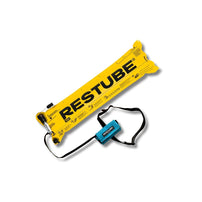
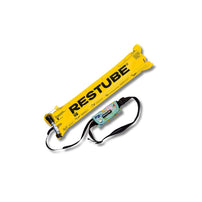
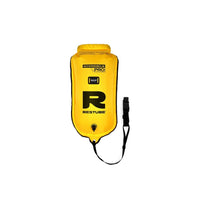
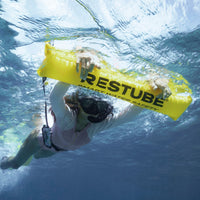
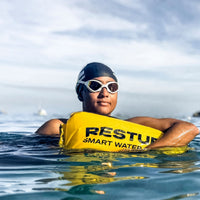
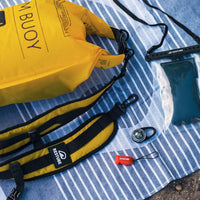
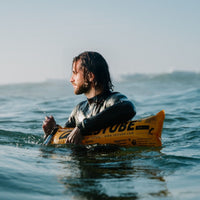
A leash – the connection between board and paddler – is an absolute must-have. If you fall in, your board won't drift away. But choosing the right leash matters: for flat water and waves, an ankle leash is the right choice. On rivers or in whitewater, though, you should switch to a quick-release waist leash instead. With an ankle leash, there's a risk it gets caught on underwater obstacles and holds you in place. An additional flotation aid like the PFD by RESTUBE can provide extra safety. Solid swimming skills are a prerequisite.

For longer tours, you should also bring: 

  • enough water,
  • a small snack,
  • a waterproof bag for valuables,
  • and a phone for emergencies.

Stand-up paddleboarder tilting the nose of his board out of the water while performing a pivot turn on a calm lake.

Technique is another important factor. Most people manage to stand on the board and paddle forward. But how do I react if a motorboat is heading my way and I need to get out of the way fast? You should be able to turn confidently and stay calm even in stressful situations. Perfect technique isn't essential, but a solid foundation is. That's why I especially recommend a beginner's course for those just starting out.


FREE Stand Up Paddling Water Safety Guide

Everything You Need to Stay Safe

Critical dangers, activity-specific tips and the right equipment – all in one guide. Sign up for our newsletter and get it as a free, printable PDF.

Read the Stand Up Paddling Guide

About the author Kimo Kersting

Kimo Kersting

Kimo Kersting

Professional Stand-Up Paddleboarder

Kimo Kersting has been practicing stand-up paddling since he was 14 years old and has been competing professionally for the German national team since the age of 18. Whether in whitewater, on flatwater, or in ocean waves, this versatility is exactly what fascinates him about the sport. Participating in European and World Championships, as well as winning numerous national titles, has shaped his athletic journey. Despite all his sporting ambition, one thing has always come first for him: the balance between maximum enjoyment and uncompromising safety. Since conditions on the water can change at any moment, respect for nature is the foundation of every session. Kimo's goal is to share this passion in a way that combines the joy of the sport with a strong sense of responsibility and awareness.

Water Safety Guide

More articles about Stand Up Paddling

Find all articles related to Stand Up Paddling in our free water safety guide.

  • Suction Currents At Weirs And Locks: The River Hazards That Are Hard to Escape
    BASICS & RISKS

    Suction Currents At Weirs And Locks: The River Hazards That Are Hard to Escape

    While dramatic phenomena like large hydraulic rollers or rapids often attract attention, the more common and realistic danger in many central European rivers lies at fixed structures such as locks, weirs, and water outlets. Here, eddies and vertical suction currents develop, making these spots particularly misleading for swimmers and water sports enthusiasts - hard to see and often limited to very small areas.

    2 min

    416

    Read Article →
  • Stand Up Paddling – Between Summer Vibes and Responsibility
    WATER ACTIVITY GUIDE

    Stand Up Paddling – Between Summer Vibes and Responsibility

    SUP national team athlete and SUP instructor Kimo Kersting knows how quickly a relaxed session on the board can turn into a critical situation. In his experience report, he shares what really matters when it comes to wind, current and the right gear – and why respect for the water means just as much to him as competitive ambition.

    3 min

    326

    Read Article →
  • Understanding Hydrodynamics: Currents, Surf And Water Movement
    BASICS & RISKS

    Understanding Hydrodynamics: Currents, Surf And Water Movement

    Water is never passive - it carries, pushes, and pulls. Beneath every calm surface, invisible forces are constantly at work, shaping currents, surf, and water movement in ways most people never notice. Understanding how water moves, why certain spots are far more dangerous than they appear, and how to recognise and respond to them can make all the difference when it matters most.

    4 min

    201

    Read Article →